Saturday, 17 November 2012

The Saint Smashes Communist Menace!


I didn't watch the hugely successful TV series of The Saint, which all my contemporaries loved, aetat 5, (I hope I wasn't even then an intellectual snob) but I read one of or two of the books in my teens - they have a charm. How exotic Leslie Charles made Biarritz and Madrid sound, but they sounded utterly exotic anyway to me, who had never visited anywhere more interesting than the Low Countries and the Rhineland with my Mum and Dad. 
File:Leslie Charteris.jpg
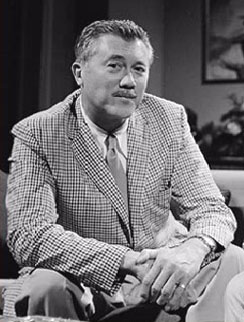
Leslie Bowyer-Yin


Leslie Charteris was the pen-name of Leslie Bowyer-Yin, who was a half-white, half-Chinese boy from Singapore. He left King's after his first year, after selling his first book, which seems to me rather stylish. In his way, he was a great Cambridge man. How different a Kingsman from E.M. Forster or Salman Rushdie, but almost as good a writer as those two.

His death passed unremarked by most of the press but The Washington Post published an obituary which said:
Mr. Charteris shared many characteristics with his creation - both were rich, tall and handsome and lived a champagne lifestyle. 
While Templar, a sort of modern Robin Hood in a tuxedo, socked jaws, threw knives and sorted out the bad guys, his creator wrote books that made him into one of the most popular mystery novelists of modern times.

Like Raffles and Arsene Lupin, Simon Templar, 'The Saint', was a post-modern, a thief who was a hero. This was the beginning of the nihilistic age in which we now find ourselves bivouac-ed.

I can think of several English male friends for whom The Saint and James Bond were and are role models, though as far as I know they do not purloin jewels. They drive fast cars and chase young girlfriends. Eastern Europe, which still has not 'received' feminism, is a good stamping ground for them. I remember David Short, the publisher, saying that when he was a boy he thought that when he grew up life would be like The Saint, with girls dancing in cages in nightclubs but when he did grow up he found that feminism had happened and it wasn't like that. But in Eastern Europe, he said with gratitude, feminism had not happened and it was just like living in The Saint. I suppose he was right. 

Perhaps I should throw away my distaste for materialism and develop a champagne lifestyle, at least on occasion, but Simon Templar and James Bond were not my heroes. Steed was my childhood hero and Richard Hannay was another, but my greatest role model was Lord Macaulay, writing his letters in Albany or in his club. Scripts are written for us when we are very young and we follow them.

Wednesday, 14 November 2012

Thoughts reading Gibbon: 1

I am reading Gibbon at last. I should be reading Gibbon in an 18th century edition in tooled leather in an armchair in a London club while eating toasted teacakes, butter spluttering on the pages - instead am in Bucharest with a kindle. But never mind. 

I shall blog thoughts inspired by Gibbon as I go along and start with a quotation that every schoolboy knows (Macaulay and I have the same faith in the general culture of schoolboys):

‎"If a man were called to fix the period in the history of the world, during which the condition of the human race was most happy and prosperous, he would, without hesitation, name that which elapsed from the death of Domitian to the accession of Commodus." 

Few people in our age which admires comfort, equality of opportunity and state subsidised medicine would agree. Only when it comes to not discriminating against homosexuals does second century Rome measure up to present day Western European standards. Nor, for all their reverence for Ancient Rome, do I believe that most Englishmen of Gibbon's time would have agreed. The England of King George III enjoyed the benefits of Christianity, the rule of law, habeas corpus and parliamentary government (how quickly all these are melting away, these days). 

When, then, was the condition of the human race most happy and prosperous? The historian Patrick  Dillon has no doubts and nor do I. The answer is undoubtedly now, despite all the fresh paint, out of town fitness centres, vulgarity, egalitarianism, authoritarianism, migrations of people, rock music, hydrogen bombs, etc., etc: modern medicine and dentistry trump all these, not to mention the collapse of Marxism-Leninism. That is, if you live in the rich world (which includes of course Romania) but even in most of the poor world things are better than they were until recently.

Choosing alternative eras is an enjoyable parlour game, if you have a parlour. Of course, just as people prefer to dress up as kings and queens for fancy dress parties, so they always imagine themselves as Cleopatra rather than as a dentist in Hellenistic Egypt, as Napoleon rather than as a syphilitic peasant girl. Playing that game, I might choose London in the 1930s for the music and politics and women - they had demolished fewer old buildings then and my working-class grandmother and great aunts all said England was much better before the war. When I came to live in Romania, which in 1998 felt like what I imagined England was like in 1954, I began to think they had a good point but nevertheless no sentient being would really want to live in the 1930s rather than now. Especially with the horrors of war to come (what faces us now we don't know). 

I hate the 1960s and would have  hated to have lived then (what am I saying? I did live then, up till the age of 8) but I am very much a child of the 60s, just as De Maistre for all his reaction was a man of 1789 not a Metternichian conservative. In fact I am a hippy and proud of it but I don't like the superficial aspects of hippiedom. Pope Benedict XVI whom I love every much is also a hippy. Hermann Hesse, whom I have not read yet, is His Holiness's favourite author.

Reading Gibbon, I can also imagine several Romanian girls I know loving life in the Roman Empire - until they had toothache, at least. Janina Sirbu and Dana Nastase among public figures fit right in too, plus any number of B-List celebrities, like Raluca Badulescu, Ana Burchill, Adriana Bahmuteanu, etc, etc. These Romanians undoubtedly are Latins.

Why didn't I read Gibbon decades ago? He is very good indeed, of course, and I loved Suetonius in translation at thirteen, so why not Gibbon who wrote in my language? Although, as I expected, he writes better sentences than Lord Macaulay but Macaulay is better for reading in long bursts. If you have nor read either, gentle reader, please start with Macaulay.


Lytton Strachey said Macaulay's prose was metallic and perhaps I know what Strachey meant, but for me it sings and never more so than than in this very famous passage, where he invades Gibbon's period. I am sure Gibbon never wrote anything a quarter as good:
"There is not, and there never was on this earth, a work of human policy so well deserving of examination as the Roman Catholic Church. The history of that Church joins together the two great ages of human civilisation. No other institution is left standing which carries the mind back to the times when the smoke of sacrifice rose from the Pantheon, and when camelopards and tigers bounded in the Flavian amphitheatre. The proudest royal houses are but of yesterday, when compared with the line of the Supreme Pontiffs. That line we trace back in an unbroken series, from the Pope who crowned Napoleon in the nineteenth century to the Pope who crowned Pepin in the eighth; and far beyond the time of Pepin the august dynasty extends, till it is lost in the twilight of fable. The republic of Venice came next in antiquity. But the republic of Venice was modern when compared with the Papacy; and the republic of Venice is gone, and the Papacy remains. The Papacy remains, not in decay, not a mere antique, but full of life and youthful vigour. The Catholic Church is still sending forth to the farthest ends of the world missionaries as zealous as those who landed in Kent with Augustin, and still confronting hostile kings with the same spirit with which she confronted Attila. The number of her children is greater than in any former age. Her acquisitions in the New World have more than compensated for what she has lost in the Old. Her spiritual ascendency extends over the vast countries which lie between the plains of the Missouri and Cape Horn, countries which a century hence, may not improbably contain a population as large as that which now inhabits Europe. The members of her communion are certainly not fewer than a hundred and fifty millions; and it will be difficult to show that all other Christian sects united amount to a hundred and twenty millions. Nor do we see any sign which indicates that the term of her long dominion is approaching. She saw the commencement of all the governments and of all the ecclesiastical establishments that now exist in the world; and we feel no assurance that she is not destined to see the end of them all. She was great and respected before the Saxon had set foot on Britain, before the Frank had passed the Rhine, when Grecian eloquence still flourished at Antioch, when idols were still worshipped in the temple of Mecca. And she may still exist in undiminished vigour when some traveller from New Zealand shall, in the midst of a vast solitude, take his stand on a broken arch of London Bridge to sketch the ruins of St. Paul's."


Sunday, 11 November 2012

Pagans and Christians

I am at last reading Robin Lane Fox's Pagans and Christians and finding it interesting and informative but less of a joy than I expected. He writes reasonably, but not exceptionally, well but his learning is vast and his insights seem astute to a general reader like me. I wish he took the story up to the first century of Islam but of this very little is known.

It is unusual for a historian to write authoritatively about both Christians and pagans, as does Lane Fox. He admits his debt to Gibbon but finds much evidence to show that Gibbon greatly exaggerated the loss of faith in the old gods before Constantine's conversion. Only a highly educated few did not believe that the pagan gods intervened in human affairs. One is interested to see parallels between this folk religion and later folk Catholicism and I wished the book drew them out

One thing Lane Fox makes clear is that, of course, the second century church was much more puritanical about sexual morality than almost any modern Christians. Virginity was prized very highly and even sexual intercourse within marriage was suspect, at least for some. Homosexual activity and divorce followed by remarriage, both of which were considered absolutely normal in the Roman world, were always considered grave sins by Christians, as were abortion and infanticide. This distinguished Christians from Jews who, following the Mosaic law, allowed divorce and disapproved of abortion from concern for the health of the mother, rather than the unborn child. Christians today who condemn abortion and homosexual acts are therefore not distorting Christian doctrine. Au contraire. Liberal theologians who maintain that sexual rules are not really part of Christianity are simply wrong, unless they argue that the church taught differently in the first century, but we know from the letters of St. Paul and from other writings that this was not the case. Jesus, a first century Jew, of course considered fornication and sodomy as sins. The change he made was to make sexual morality much stricter by abolishing divorce and this is the rule which, according to Lane Fox, early Christians found hardest to accept.

Lane Fox explains how homosexuality and bisexuality were taken for granted in the ancient world, for men, and goes on to say:
As for homosexuality, Paul and the early apostles agreed with the accepted Jewish view that it was a deadly sin that provoked God's wrath. It led to earthquakes and natural disasters, which were evident in the fate of Sodom. The absence of Gospel teaching on the subject did not amount to tacit approval. All orthodox Christians knew that homosexuals went to hell, until a modern minority tried to make them forget it.

The last part of the book is a detailed discussion about St. Constantine, the Emperor Constantine the Great. I knew very little about him except that he was a murderer and adopted Christianity for pragmatic reasons. Lane Fox is convincing that Constantine's conversion was very genuine and a deep change of heart. 

Constantine deserves better than any other historical figure the soubriquet 'Great'. He transformed Europe far more than Napoleon or even Hitler and, unlike those two, he transformed it for the better. He also transformed Christianity. He also created Constantinople and the Byzantine cultural space in which I am typing these words, in my office in Bucharest. His reasons for executing his wife and son I do not know.

One of the reasons Constantine was converted was because, very understandably, he saw the hand of God in his victories over his opponents. So did other Christians. This belief that God intervenes in history was what made the early Muslims believe their prophet was the true one. It made the British and the Americans, who borrowed the idea from the British, believe that God had given them a special destiny. It has recently, for some reason, gone out of fashion even in America, as I discuss here. 

The idea that God is visible in history was replaced by Marx with the idea that the historical process is God and I think this illusion continues to influence progressive thinkers.


Saturday, 10 November 2012

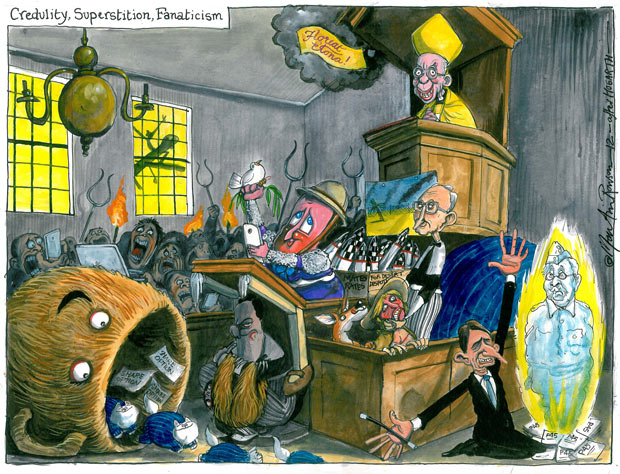
"They're trivial: like dogs in their lusts. We destroyed Christianity yet had its benefits."

Martin Rowson 10.11.12
Cartoon in today's Guardian greeting the appointment of the new Archbishop of Canterbury


The Bishop of Durham, it was announced yesterday, will be the next Archbishop of Canterbury. He quoted, in an interview today with The Guardian, John Maynard Keynes writing to his fellow atheist, Virginia Woolf, in 1934: 

"Our generation - yours and mine.... owed a great deal to our fathers' religion. And the young ... who are brought up without it will never get so much out of life. They're trivial: like dogs in their lusts. We had the best of both worlds. We destroyed Christianity yet had its benefits."
Lord Keynes, as he then wasn't.

Keynes sounds like Margaret Thatcher saying in a speech the 1970s, before she became Prime Minister,  

"We who live off the moral capital of the Victorians..."

The current Hungarian Prime Minister, the much reviled (by The Guardian) Prime Minister of Hungary, made a related point recently:


I have this feeling that a majority of European leaders have lost their faith in what made Europe great and into an influential factor in the world. Moreover, it seems as if it would be something shameful or something forbidden to talk about this issue. We can not help to see that those who are coming up now, stand firm for their spiritual identity: the Islamic peoples to Islam, the Asian peoples to Asian traditions and their spiritual system. It’s not just about God, but also about the culture that was influenced by their traditional beliefs. We on the other hand reject the power that comes from the fact that this is the world of Christian culture. The successful ones make sure that there is no future without children and family.

And contemporary America is also losing her faith, as I blogged here.

Individuals and nations have to find a meaning to their lives. Belief itself is perhaps even more important than what you believe in.

Life is hard; it's harder if you're stupid.


Apparently John Wayne said:
Life is hard; it's harder if you're stupid.

My first reaction was not true - the reverse is the case.

But on reflection? Unintelligent people do not necessarily worry less because they do not know all the things there are to worry about. Life should be least hard for people who have what a friend of mine (who has one) calls a leader's IQ - high, but not too high. Tony Blair's not Wittgenstein's. On the other hand my friend's life is pretty hard. He is a true leader but has no-one to lead.

The 'signature' on my emails, taken from the strip cartoon Calvin and Hobbs, says: 
People think it must be fun to be a super genius but they don't realise how hard it is to put up with all the idiots in the world.
It may reveal too much about me.

I remember that a wise man I knew once told me there were three kinds of people you can't touch: very intelligent people; rich people; and people with a religious faith. Yes and no. It is easier to manipulate intelligent people than less intelligent ones and it is certainly possible to manipulate religious people and fools with money. 


Lord Curzon's 15 Good Reasons Against the Grant of Female Suffrage

I regard women as superior and I don’t like to see them trying to become men’s equal.
Violet Markham, speaking in October 1910.

I am satisfied with my present position, and of my almost unlimited power of usefulness, that I have no need of a vote, and should not use it if I had it. 
Edith Milner, writing in The Times, 29 October 1906.

I frown hearing the suffragettes invoked by feminists who complain that there are not enough women in political life, as if as many women want to have political, or any, careers as men.

People increasingly talk about the Suffragettes as if they were admirable when they were nothing of the sort. Their extra-legal activity set back the cause of giving the vote to women by years. Women were eventually given the vote by the Conservatives as a reward for their contribution to the war effort in the Great War.


Giving the vote to women led to a great accession of strength for the right, as the liberals in Europe always knew it would. Had women not had the vote Labour would have won every British election from 1945 to 1979 inclusive. I do not have more recent figures. From a conservative point of view, giving women the vote, in the language of Sellars and Yeatman, was a Good Thing.


Most British women did not want the vote until they were given it, including plenty of feminists. 'Lord Curzon's 15 Good Reasons Against the Grant of Female Suffrage' are here and here. I wish I could find online his speeches to the Women's Anti-Suffrage League of which Mrs. Humphrey Ward, the novelist, was the president. I know he said this when he addressed the League:


What is the good of talking about the equality of the sexes?   The first whiz of the bullet, the first boom of the cannon and where is the equality of the sexes then?

It was a more innocent era and one for which one sometimes pines, now that the House of Commons has family-friendly hours that allow the Government to pass what bills it pleases. 


As for women bishops...

Friday, 9 November 2012

History doesn't repeat itself. Historians repeat one another.


No photo description available.


The only lesson history teaches is that history teaches no lessons. A.J.P. Taylor


AJP Taylor was very Shavian and strove to speak in paradoxes (I do too). It would certainly be true to say that the lessons drawn from history and put into practice are almost always mistaken. For example the lesson we have drawn from the Nazis is that ethnically mixed societies are ipso facto good things rather than ipso facto volatile things. 


George W. Bush drew the wrong lessons from World War II by attacking Iraq, as I used to think did Eden over Suez, but I think now that maybe Eden drew exactly the right ones. Perhaps the difference between drawing the right and wrong lessons is how things turn out after you put the lessons into practice. Taylor is more right than wrong.

As A.J.P. Taylor also said, we learn from the mistakes of the past to make new mistakes in the future.


Monday, 5 November 2012

Was Guy Fawkes set up?


Please to remember
Fifth of November
Gunpowder, treason and plot.

Tonight is Bonfire Night or Guy Fawkes Night in England. It is the day when English fathers try their best to set off fireworks in back gardens, to celebrate the foiling of the Catholic plot to blow up the Houses of Parliament during the State Opening in 1605, a story which my generation knows from the admirable Ladybird Adventures from History series. Bonfires are lit and 'guys' (from Guy Fawkes, the leader of the plot) are burnt.

Actually, this is not quite true - more and more, because of omnipresent health and safety concerns, private fireworks are discouraged by the anxious British state. Its anti-Catholic meaning also sits uncomfortably with the syncretic and relativist spirit of our age. Hallowe'en, its religious meaning forgotten, is much more congenial to opinion formers, but even children going knocking on neighbours' doors has its dangers. One sometimes feels that the British government would really like its subjects to stay at home in the evenings and watch propaganda on television.


I once met Fr. Francis Edwards, a lovely old Jesuit, who wrote a book suggesting, on circumstantial evidence, that the Gunpowder Plot was laid by Cecil, not by the Catholics, and that half of the 'plotters' were employed by Cecil and promised that they would be set free unharmed. Instead, they were all hanged, drawn and quartered. 
Fr. Edwards' ideas are summarised here.

File:Gunpowder Plot conspirators.jpg

This part is chilling:

Cecil promised the conspirators they would be allowed to escape or pardoned and then broke his promise. How could he convince Catesby and co they would not be executed? There was the precedent of the “Main Plot” three years previously. The conspirators in that had reached the scaffold and were kneeling in the straw and about to put their heads on the block when a royal messenger with the king’s pardon dramatically revealed himself. Cecil could have assured the gunpowder conspirators that the same thing would happen to them.

....The other conspirators were lodged in the Tower in exceptionally comfortable conditions, which was odd, because they were supposed to be murderers and traitors of the worst kind. They had plentiful food and drink and were allowed an unlimited supply of tobacco, which was then a luxury. At their trial in Westminster Hall they looked nonchalant and unconcerned. They attempted neither to justify their conspiracy nor to beg for mercy. Such conduct is compatible with the notion that they regarded the trial as just a formality and thought they were secure from execution. Their high living must have increased their sense of security. One can imagine them going to the scaffold with the same unconcern. Until almost the last, they would have assumed they were all right.


The Church of England hierarchy in those times were men of a different stamp from the bishops of our own day, who read The Guardian in the Athenaeum and talk about global warming:


A special committee, including Anglican bishops, was set up to try to devise an especially horrible and painful form of execution to fit the nature of the crime. But the members are unable to think up anything suitable and settle for the conventional hanging, drawing and quartering.

As Evelyn Waugh said, talking about the horrible martyrdom of St. Edmund Campion, the Church of England still had some way to go before it became the institution described in the novels of Anthony Trollope. 


Sunday, 4 November 2012

The Maramures: The Last Peasants


"The country is holding its breath today," read The Times. “Tension and nerves will be felt by millions who know that the bombers have chosen Thursday as a day of atrocity.”
The world has been rewritten by the writers of cheap thrillers. And not necessarily present day thrillers. We feel as if we are in the neurotic pre-1914 landscape of William Le Queux or early Edgar Wallace.
While Londoners were waiting pensively in the tube I was in another kind of pre-1914 landscape, driving through villages in the Maramures, the northern edge of Transylvania bordering on Ukraine. Here life hasn’t changed very much in centuries but it will soon change utterly. Here in the most conservative part of Romania, Europe’s least modern country, peasants have not completely given up traditional costumes, for example. Such tractors as were to be found here under Communism were long ago sold off and horse-drawn ploughs are universal. Old women in black scatter seed in the fields. This is subsistence farming of a kind which had disappeared elsewhere and must soon disappear here too.
It took me fifteen years to get to Maramures. In 1990 when everyone in the Transylvanian countryside wore traditional costume to Mass and cars were scarcely seen, I asked my Romanian companion, ‘Is this the poorest part of Romania?’ It was my first day here. ‘No, it’s the richest. Can’t you tell?” A disconcerting reply. ‘If you want to see somewhere poor and old fashioned you should go to Maramures. In Maramures they’re still living in the Stone Age.’
In those fifteen years Maramures has changed like the rest of Romania. Gloucestershire has been bought up by stockbrokers wanting weekend cottages and Maramures I had read was full of villas built by customs officers and police colonels.  And there are plenty of big new houses around. A lot fewer people wear costume every day than did when I missed my first chance to visit. Tourism is bigger business now than it was then and there is a steady stream of foreign visitors but the area still feels pretty undiscovered, well protected by its inaccessibility. You can’t get there easily from anywhere by car, train or plane.
In Maramures villages men in hats and women with scarves, aged from thirty upwards, spend a lot of time sitting on roadside benches. They look attentively at each car or pedestrian that passes and conversation languishes. Tranquil is I suppose the word. The bomb explosions in London seemed unreal to Londoners but less real in Maramures.
Agrotourism, putting up with peasants, is the joy of travelling in Romania. This is tourism on a human scale, bespoke. You are a lodger but treated as a friend.  Catch it before its innocence has been lost and before Romania enters the E.U. in 2007. Your hosts who are subsistence farmers provide milk for your coffee fresh from the cow at the end of the garden. How much will be lost when EU health regulations bring all this to an end.
The priest’s wife in the village of Botiza, Mrs Victoria Berdecaru, has revived the carpet making industry in the village, organised a very neat crafts museum and organises accommodation for visitors. I stayed with Vasile the handsome 40 year-old local carpenter and handyman who built the museum and who told me ‘I do everything except dig graves. I won’t dig graves.’
I came on a chance impulse to see the 38th edition of the Hora La Prislop festival. Horas  are traditional Romanian dances and every village has its dances. Hora La Prislop is held on a mountainside and participants from villages throughout the Maramures compete for prizes. It attracts a big well-mannered audience who sit on the grass watching the stage neither eating, drinking nor talking. I also noticed three or four foreigners, one bestrewn with two large and expensive cameras. The festival is great fun on a sunny Sunday afternoon if you repress the adage about trying everything once except incest or Morris dancing.
The date of the first festival, 1968, is telling. Nicolae Ceausescu was just beginning to wrap himself in the flag and emphasise the traditions of the Romanian peasantry, twenty years before he began to knock down villages to make way for agro-industrial complexes. We were back in the 1970s and you expected to see local party dignitaries in crimplene suits make speeches praising agricultural output.
This was the eve of Assumption Day. In Romania as in much of Southern Europe the Assumption of the Virgin is one of the most important days of the year. It is treated in the countryside as an unofficial holiday. The roads were full of processions, adults in full costume, and angelic girls in white as for a first Holy Communion.
People from all over the area and the two biggest processions converged on the Monastery of Moisei where Mass in the open lasted from early evening till midday. Until 1989 these processions were forbidden by the police and had to be held under cover of night but today every ex-Communist politician wants to be photographed on the Assumption at some famous monastery. Moisei was crowded with visitors and stalls selling refreshments. Long before the first procession was near the narrow road to the monastery was blocked and impassible by car.
Wooden churches are what Maramures is renowned for, with spires, steep roofs and wall paintings. I attended Mass the next morning in a Greek Catholic church in Iaud or rather in the graveyard amid hollyhocks and brightly painted crucifixes with most of the congregation. The women stood together in the front, the men together at the rear. Most of the women wore scarves and traditional blouses and skirts but there were a few in blue jeans and loose hair. Each year the numbers of the latter increase.
The priest at the close read out the names and size of the contributions made by parishioners to the cost of building the new church. (“€100 on the part of Mrs Ionela Ghica, €100 on the part of Vlad Dumitriu…”) Everywhere you go in Maramures new churches have been or are being built alongside the houses of incomers.  A few miles away an impressive Orthodox monastery complex has been built on the site of one suppressed in the eighteenth century.
Iaud is a village where half the population is Greek Catholic. The Greek Catholic rite resembles that of the Orthodox but the Greek Catholics, also known as ‘Uniates’, recognise the authority of Rome. Iaud boasts several fine wooden churches and a reputation for large families.  It seems that the inhabitants observe the Church’s teaching better than in richer parts of Europe. According to Vasile: ‘If you have three children here people think you’re impotent.’
Sighet, a pleasant Austro-Hungarian town a mile from the Ukrainian border, houses the infamous prison where after the Communist takeover the leading politicians and opinion-formers were incarcerated, tortured and in many cases killed. Today the prison is a well-designed museum that explains the Stalin era. When I visited the museum had plenty of customers. Children ran around noisily. I got a slight sense in the exercise yard of the horrors of the recent past, I stood in the little cell in which democrat Iuliu Maniu had died and I went out. I was pleased that President Ion Iliescu, a leading member of the Communist Party’s youth wing during the years when the prison was busiest, had not been to see it.
Vasile told me that the secret of a happy life is preserving tradition. ‘You have to change but you should keep the traditions.’ I thought of life in London where traditions have been dissolved by affluence, technology, pop culture and multiculturalism. In the Maramures past and present are seamless, the existence of God is assumed rather like the sun rising each morning, neighbours know everything about each other and no man is an island.
But the numbers of cars we saw everywhere with Italian driving licenses testify to the exodus of Moreseni to work abroad. In the locality where I was staying everyone went to Northern Italy, where the discipline of Italian life was irksome but the money was very good. In other parts of the Maramures I am told everyone goes to Spain. Maramures is beautiful but desperately poor and an economic impossibility. As Vasile said to me ‘When you say agriculture you say poverty.’ Europe no longer has room for subsistence farmers and even if people like Vasile would never swap their lives for anyone else’s, his three daughters will go to college and not return to live their mother’s way of life. Vasile has no regrets. ‘They must fulfill their destiny. I hope they will return here when they are old.’
© Paul Wood 2005


This was published in Vivid in October 2005, just after the bombings on the London underground by British Muslim terrorists.


Saturday, 3 November 2012

Edmund Burke on prejudice and Muslim governance


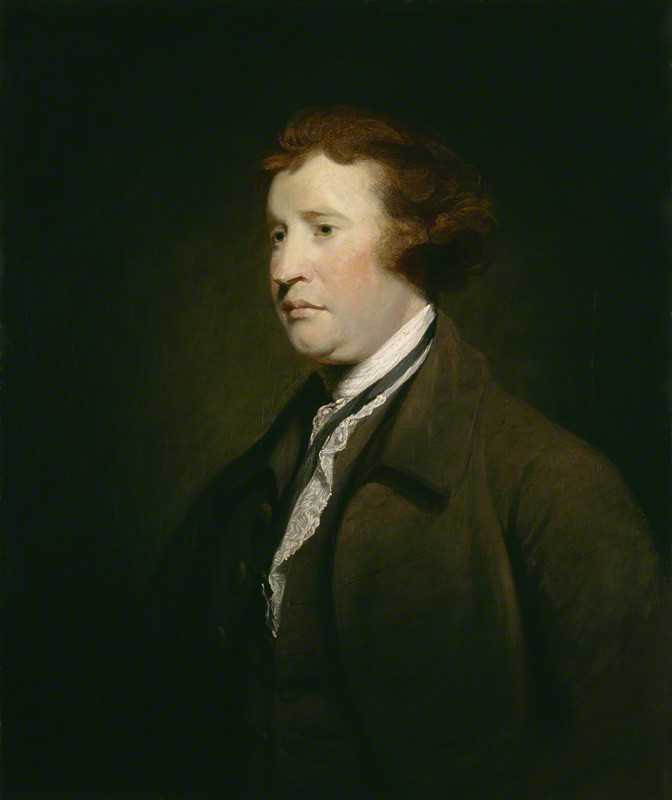
File:EdmundBurke1771.jpg


What is Jacobinism? It is an attempt . . . to eradicate prejudice out of the minds of men, for the purpose of putting all power and authority into the hands of the persons capable of occasionally enlightening the minds of the people. For this purpose the Jacobins have resolved to destroy the whole frame and fabric of the old societies of the world, and to regenerate them after their fashion.


Prejudice is of ready application in the emergency; it previously engages the mind in a steady course of wisdom and virtue, and does not leave the man hesitating in the moment of decision, sceptical, puzzled and unresolved. Prejudice renders a man’s virtue his habit; and not a series of unconnected acts. Through past prejudice, his duty becomes part of his nature.


To make men love their country, their country ought to be lovable.

A man full of warm speculative benevolence may wish his society otherwise constituted than he finds it; but a good patriot and a true politician always considers how he shall make the most of the existing materials of his country. A disposition to preserve and an ability to improve taken together would be my standard of a statesman. Every thing else is vulgar in the conception, perilous in the execution.


To name a Mahomedan government is to name a government by law. It is a law enforced by stronger sanctions than any law that can bind a Christian sovereign. Their law is believed to be given by God; and it has the double sanction of law and of religion, with which the prince is no more authorized to dispense than any one else. And if any man will produce the Koran to me, and will but show me one text in it that authorises in any degree an arbitrary power in the government, I will confess that I have read that book, and been conversant in the affairs of Asia, in vain.


Thursday, 1 November 2012

The Wisdom of Psychopaths and Monks


An interesting article in the current edition of Forbes Magazine, on the ability of psychopaths to read people. 


Ironically, both psychopaths and Tibetan monks detect deep emotions that are invisible to others. Psychopaths are much better at recognizing “those telltale signs in the gait of traumatized assault victims” notes The Wisdom of Psychopaths author, Kevin Dutton. 

Tibetan monks, steeped in meditative practice, are also especially adept at reading feelings that are hidden from the rest of us, Paul Ekman discovered. Ekman, is the preeminent expert on lying and on the six universally expressed emotions in the face — anger, sadness, happiness, fear, disgust and surprise. Scarily, psychopaths score especially high on the Hare Self-Report Scale of psychopathy in seeing those core expressions, especially the ones that make us most vulnerable, fear and sadness, according to Sabrina Demetrioff.

The explanation is the monks' deep meditation and the psychopaths' congenital lack of fear which makes them calm and unstressed.

Relaxation releases intuition, something I have learnt from experience and was once told by a high-performing psychopath. Another reason to practice meditation.


The purpose of the characteristic, long, penetrating stare of the psychopath has not been completely explained by psychologists but staring them out, while it may make you feel you have defeated them, may be what they want and dangerous. In Nietzsche's words:


When you stare into the abyss the abyss stares into you.

The stare is a means of asserting power but more importantly of reading people and returning the stare may in some way allow them to read you better and even, who knows, enter your mind. 

The psychopath inhabits a private melodrama in which he is the evil villain. Anyone who has known psychopaths well knows that, when they take off their masks, they seem completely inhuman. And there is evidence that they are in a true sense reptilian as Thomas Sheridan explains here. There is a persuasive theory that they have an evolutionary need to propagate themselves which is why male and female psychopaths alike typically have many children, starting young, whom they abandon or shamefully neglect. One woman psychopath I knew of delighting in donating her eggs for in vitro fertilisation and I am very sure she was not the only one: another argument against test tube babies.

Psychopaths have very good brains and they also have emotions, but they cannot love, except, in their own way, close members of their family, whom they consider extensions of themselves. Psychopaths therefore have no conscience, for conscience is a function of love, not reason. The psychopath's inability to love is the reason for his insatiable desire for power for this, unlike love, he does understand. As Carl Jung put it:


Where love rules, there is no will to power; and where power predominates, there, love is lacking. The one is the shadow of the other.


Psychopaths are not sadists - as one explained to me, its not about causing pain - its about power.  Sadists feel your pain - psychopaths do not. Psychopaths are only concerned about themselves. They are inhuman, sadists are humans.

For more information about how to learn the wisdom of psychopaths, a very useful wisdom indeed, by the way, for honest men as well as for knaves, here are 'Count' Victor Lustig's ten tips.


'Count' Lustig practices the psychopathic stare.

Lustig was an inter-war conman and is or was famous for selling the Eiffel Tower, as scrap metal. He also once scammed Al Capone of $5,000. Interestingly, he spoke five languages: psychopaths are often very good linguists, in my experience. They often have photographic memories but there are other reasons too why languages are attractive to them - every language is both a vehicle for deception and a mask.


Psychopaths delight in giving advice and especially in mentoring younger psychopaths. Lustig wrote the following list of rules for aspiring con-men. 
(Source: Fakes, Frauds & Other Malarkey)


  1. Never look bored.
  2. Wait for the other person to reveal any political opinions, then agree with them.
  3. Let the other person reveal religious views, then have the same ones.
  4. Hint at sex talk, but don’t follow it up unless the other fellow shows a strong interest.
  5. Never discuss illness, unless some special concern is shown.
  6. Never pry into a person’s personal circumstances (they’ll tell you all eventually).
  7. Never boast. Just let your importance be quietly obvious.
  8. Never be untidy.
  9. Never get drunk.'


For more by me about psychopaths, please click here and here. 

Wednesday, 31 October 2012

Halloween costumes should not be subjected to gender stereotypes


This sort of thing makes up my mind for me. Yes, even though Mr. Obama saved General Motors, I do want Mitt Romney to win. The people who write this sort of thing scare me deeply and they do not, I imagine, vote Republican.


Whenever I hear the word gender used to mean sex, I reach for my gun.

Tuesday, 30 October 2012

I have loved this coin since I was a little boy. I saw it in the British Museum as a child. SO beautiful.


Interesting that under the changes to the British succession, which were recently introduced, under which first born daughters would succeed instead of subsequently born sons, the Hohenzollern, Kaiser Wilhelm, would have been on the British throne in 1914.


If this change had taken place in the Tudor period, then the crucial reign of Edward in which he and his tutor Cranmer turned England Protestant instead of back to Roman Catholic, as Mary later tried and failed, would never have happened. History changed so much because of that short reign.

Those utterly disastrous few years that did so much harm - much worse even than Tony Blair's period. My objection to the change in the law is that it is changing something immensely old and beautiful - plus letting magic in on mystery and ridiculous to try to mix monarchy and egalitarianism. My objection is not because Queens are not so effective as kings although this is true too. But feminism doth make cowards of us all - the only idea even more powerful than anti racism.

Edward VI had he lived would have been much stronger than Elizabeth I. Monarchy lost power under Elizabeth I and Victoria. And there is something about the words 'The King' which gives me goose pimples - 'The Queen' does not.


This Queen has presided over many dreadful things that she could at least have warned against.

Monday, 29 October 2012

Divine retribution in the blogosphere


Is Hurricane Sandy 'God's revenge for the refusal of the US government to take action on the climate crisis'? Or because Mitt and Obama are 'a pro-homosexual Mormon and a pro-abortion/homosexual Muslim'? Hard to call.

Actually, I do not think it has anything to do with any of these things or any kind of punishment but I do not see why people should not think so, as they always did in the past. Dryden, for example, wrote his wonderful Annus Mirabilis to refute the idea that the Great Plague and Great Fire of London were God's judgment on Londoners and by implication on the reign of King Charles II. 

Of course, it is far-fetched and richly comic to say that God permitted the September 11th outrages because of widespread homosexuality in the USA, as Jerry Falwell did, but I was shocked that the hellfire preacher aroused such anger for saying so - everyone in America seemed furious with him and he apologised. Though, of course, why single out homosexuality not divorce or materialism or violence or a thousand other possible reasons? Mr Obama's pastor, the Reverend Jeremiah Wright, thought September 11th was a punishment for racism. And so it goes. 

By contrast, in England, acts of God somehow seem to be considered, even by devout Christians, purely a term of art from the insurance industry. English Christians sometimes even refuse to believe that God causes natural disasters or illnesses, which goes along with what Jonathan Meades meant when, speaking of modern British church architecture, he referred to 'the idea of God, the awfully nice bloke.' Romanians have a much clearer idea that God is very immanent and to be feared as well as loved.

If hundreds of people die in the hurricane, presumably this might will help Mr. Romney. I suspect that some people, including American defence and tobacco company executives, who stand to gain from a Romney victory, are calculating that it might be the October surprise that decides the election.


Saturday, 27 October 2012

Vampires do exist

Vampires do exist. They are called psychopaths or sociopaths (the words are interchangeable) and are in a true sense the undead. They appear to be very vivacious but this is an illusion. They draw their energy from those around them, especially their victims. 

Detail from Bosch's The Garden of Earthly Delights; his demons, not sadists but methodical, destructive and inhuman, resemble psychopaths


They have no consciences. Their characteristics include extreme manipulativeness, total egocentricity, shallow emotions, fearlessness, callousness (they lack 'warm' empathy but have 'cold' empathy, meaning they are very good at reading others' emotions), superficial charm, charisma and antisocial behaviour. 

I came to know at least two of these perverse and dangerous people in Romania. Both were good-looking and highly intelligent women. One of them, let us call her Paula, matched President Mitterand's description of Mrs. Thatcher - 'the eyes of Caligula and the mouth of Marilyn Monroe'. 

The eyes are significant - the penetrating and prolonged psychopathic stare is part of the way in which they mesmerise their victims, while spinning lies or playing games. Another is by conversational hypnosis. They have soothing and caressing voices which enable them to lull their victims into acquiescence and even to implant ideas (commands) into the victims' minds, although when they are not using this mode their voices are very cold and tellingly ugly. Voices, unlike physical appearance, are, by the way, one of the best ways of reading people. 


Psychopaths like positive people because they need to find sources of energy. People without power or energy are of no use to them.

For psychopaths most of mankind are zombies. Ayn Rand, whose philosophy is pure psychopathy, expresses the psychopath's contempt for the mass of humanity:


Do you ever feel as if the world is full of zombies? Mindless people who merely obey the dictates of society and their own emotions, showing no sign of rationality, letting others decide who and what they’re going to be in this life, regurgitating moral nostrums as if they were pearls of the highest wisdom, attacking those who are not like them and wanting desperately to turn all outsiders into exact replicas of themselves... ?


One characteristic psychopaths  have which has not, to my knowledge, been remarked on is that they find their lives very tiring. It is draining to be a psychopath, constantly manipulating, lying and simultaneously juggling mind games with various people on various levels. Like autists, psychopaths often have photographic memories and minds that work very quickly and this too is tiring. My two psychopaths looked young and seemed vivacious both admitted that they tired very quickly and I came to realise that they were very old in their hearts. Undead. This is why, unlike the vampires of myth, both liked early nights.

Psychopaths are so good at reading and manipulating people that I finally concluded that it is about more than lightning-quick intellects: they have psychic powers, as many people do. They get into the minds of those they interact with. Paula told me that she sometimes had prophetic dreams and always knew if she was going to get her way at an encounter before it began. She could usually read people perfectly. She only failed, she told me, with stupid people and with 'a few people who wouldn't let me in at all and all of those, I discovered later, hated me. Not for any reason', she added, unconvincingly. On one of the first occasions when I met Paula, I had a psychic experience myself. I saw a black aura around her, blotting out the sunlight from a summer evening at the Marriott Hotel. 

A down to earth material explnation, on the other hand s that is the psychopath's inability to feel stress which lets him see calmly and unemotionally. Psychopaths and Tibetan monks, who learn calm from meditation, detect deep emotions that are invisible to others, according to the author of The Wisdom of Psychopaths, Kevin Dutton. 


Psychopaths cannot be bargained with or trusted under any circumstances. Psychopaths are dangerous and should be steered very well clear of. Apart from the harm that they delight to inflict on those around them, if they judge it safe and politic to do so, they carry around with them black clouds which occlude the happiness and joy of life. They feel savage glee and rejoice in tricks and lies but the happiness they obtain from life is most of the time thin. They are black holes. Carlyle said that 'In the moments of our greatest happiness there is something that prevents us being wholly happy. That something is nothing other than the shadow of ourselves.' That shadow makes up the psychopath's whole existence.

Dr. Martin Israel, the author of a leading work on pathology, who went on to become an Anglican priest and a famous authority on psychic forces, believed that psychopaths are: 

especially powerful mediums of destructive cosmic forces, and their power is related to their intelligence and their ability to communicate on a psychic level with other people. The murderous type of dictator, so common in our century, typifies this trend to its most devastating extent.
This, I believe, is exactly right. Stalin is a very good example.

Israel goes on to say:
The end of the powers of evil, wherever we may place their origin, is world domination. But behind this outer desire for conquest there is a hidden, deeper lust for total destruction. The evil impulse looks for the death of all life, the corruption of all beauty and the perversion of all truth and justice.


Female psychopath

This detail from Bosch's curious painting, The Garden of Earthly Delights, Paula's favourite painting, reminds me of her (she is, like most psychopaths, very promiscuous). The penetrating beak, the huge mouth, the underbelly being feasted on by hommes moyens sensual who are on their way to self destruction and, especially, the grasping hands. 

The picture, Paula said, is 'as much about contemporary New York as Holland centuries ago. I have stared for hours at every detail trying to imagine the story behind each figure.' No doubt she did so to learn as much from it as she can, because psychopaths  are only interested in knowledge they can use. 

What did she learn from it? Everyone in the painting is suffering or will suffer as a result of their weaknesses, except the pitiless satanic creatures who efficiently administer the punishments and are enjoying their task. 

The Satanic agents in the Garden of Earthly Delights are the only pure figures. They are like psychopaths, in fact, for psychopaths are curiously inhuman. They are evil yet not corrupt, are in fact incorruptible, although possessing all the deadly sins themselves. Psychopaths feel emotions such as savage glee, lust, greed, and most of all contempt and boredom but their emotional range is very limited and they do not have normal feelings, especially not feelings of  affection, or consciences which derive from such feelings. They are the proof that Aristotle and Kant were wrong to think that virtue proceeds from reason, for psychopaths  are very sane and completely rational. Conscience and virtue are functions of love not reason. 

Psychopaths, when they let down their guards, seem like creatures from outer space, not humans at all, though Diana, the second psychopath I knew, said to me once that 'I still hope somewhere in me is a little shred of humanity'. I felt sorry for her, which seemed absurd. Diana also said to me, while listening to a Bach concerto: 'This was written from pure hatred.'

Psychopaths, by the way, also seem oddly to transcend their nationality, social class and even their sex. Paula and Diana, for example, in many ways seemed like homosexual men in women's bodies.

I asked Paula what this detail from the Bosch painting meant to her, but all she said was, in the dreamy voice she affects:
'It's so enjoyable to be eaten'. 
She added:
'Victims want to be victims. I really believe that.'
And on this occasion she was telling the truth. This is, curiously, what all psychopaths  believe and perhaps at a deep level they are often right. 

There seems to be a genetic basis, although this is not certain, to psychopathy. Psychopaths' brains when scanned differ from those of normal people, but brains develop in childhood, just as personality traits do. One interesting fact is that psychopaths are more likely to have blue or green eyes than the general population. If this is true then Romania has fewer psychopaths per capita for blue and green eyes are rare in this country of brunettes. But I wonder.


For more about psychopaths by me please click here and here.


Note: I have come across this interesting blog on the subject by the well-known Romanian-American novelist, Claudia Moscovici.