Showing posts with label evelyn waugh. Show all posts

Sunday, 3 March 2013

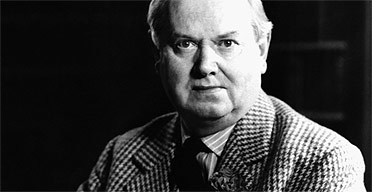
Evelyn Waugh: 'In a more civilised age Hans Kung would have been burnt'


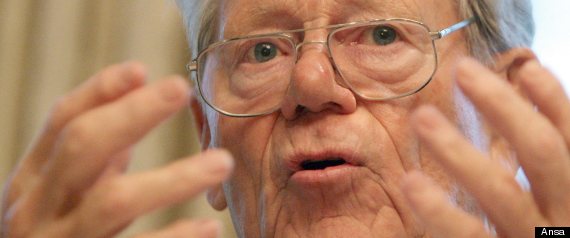
Hans Kung

Hans Kung (shouldn't it be Kueng?) describes himself as the harshest critic of Pope Benedict XVI and sums up Benedict XVI's record as almost entirely negative with one significant exception:
In 2005, in one of Benedict’s few bold actions, he held an amicable four-hour conversation with me at his summer residence in Castel Gandolfo in Rome.... 

For me, and indeed for the whole Catholic world, the meeting was a sign of hope. [1] But sadly Benedict’s pontificate was marked by breakdowns and bad decisions. He irritated the Protestant churches, Jews, Muslims, the Indians of Latin America, women, reform-minded theologians and all pro-reform Catholics.
Did you know that Catholic priests were allowed to talk like that about the Pope? Nowadays they are and to publish books denying dogmas such as the Virgin Birth and papal infallibility, denying Jesus's miracles and denying no end of other things. His prose in  'Why I am Still a Christian' is so turgid that I did not find out all the things that he does not believe in  but it comes to an awfully long list. (Yet I remember seeing Westminster Cathedral bookshop with a copy of one of Father Kung's books piled high in all the windows.) 

Ian Paisley, who believes in the Creed, is a much better Catholic than Father Kung. One knows why Evelyn Waugh, whose early death the Second Vatican Council caused, said that 
'In a  more civilised age Hans Kung would have been burnt.'
Father Kung seems a bitter man and notably lacks humility (in sharp contrast to the Vicar of Christ who spent four hours with him).  The Pope's most important act was meeting me! 

Irritating the Protestant churches, Jews, Muslims, women, reform-minded theologians and all pro-reform Catholics might be because Benedict XVI was thoroughly bold and unafraid to speak the truth, but it depends on what you think the truth is. It was indeed bold of the Pope to meet his former friend and characteristic of his humility and graciousness.  

Another bold move which I wish the Pope had made was to have excommunicated Father Kung. After all, Father Kung is not, by any definition, apart from his own, a Catholic. In 'Why I am Still a Christian'  he explains his reason for not leaving the Catholic Church of his own volition: the discouraging failure of people who have broken away from the church in the past. Well, since Luther's day, I suppose he meant.

Non-Catholics imagine we are still forbidden to use private judgement and required to believe what the Pope tells us. If only it were somewhat like that, though Catholics never had to agree with the Pope on everything. In practice, it is now a free for all. A low church Protestant friend of mine with whom I discussed Father Kung's book 'Why I am Still a Christian' said the title should have continued 'Even Though I No Longer Am.'

Father Kung's influence is immense and he advised British Prime Ministers James Callaghan and Tony Blair. He said a few years back that Muhammad was a true prophet but this will not endear him to Muslims because he does not believe in the Virgin Birth, which for them, as for Catholics, is de fide, an obligatory article of faith. 


_______________________________________________________________________
[1] Gosh, Kung has a good opinion of himself. This makes me think of Chesterton:

Are they clinging to their crosses,
F. E. Smith, 
Where the Breton boat-fleet tosses,
Are they, Smith?


Saturday, 26 January 2013

Danielle Lloyd and other wags


Danielle Lloyd is a mildly famous British WAG (WAG is a back-formation from WAGs, which means footballers' wives and girlfriends). She is famous because her picture sells newspapers and gets clicks on websites, including, I hope, mine, and famous for racist bullying of an Indian contestant on the reality television show Big Brother, though that was years ago. She should be famous for this answer that she gave on BBC One's quiz show, Test the Nation (sic). She was asked: "Who is Winston Churchill?" and answered: "Wasn't he the first black president?"'


More quotations:


Judge: I have read your case, Mr Smith, and I am no wiser now than I was when I started.
F. E. Smith: Possibly not, my Lord, but much better informed.


Judge: Are you trying to show contempt for this court, Mr Smith?
 
Smith: No, My Lord. I am attempting to conceal it.


Judge: Mr Smith, you must not direct the jury. What do you suppose I am on the bench for?
 
Smith: It is not for me, your honour, to attempt to fathom the inscrutable workings of Providence.


What is a man, after all, but his old jokes?
John Mortimer

Lord Kilmuir, who heard about his dismissal from the woolsack on the wireless: You have given me less notice than I would a housekeeper.
 
Harold Macmillan: But good housekeepers are so hard to find.

We cherish our friends not for their ability to amuse us, but for ours to amuse them. -- Evelyn Waugh


Prince Phillip, in 2000: ‎"People think there’s a rigid class system here, but dukes have even been known to marry chorus girls. Some have even married Americans."


When a Protestant sins he has no-one to whom to confess except his solicitor. Philip Guedalla

Saturday, 15 December 2012

Str. Lipscani, my manor

Str. Lipscani, my manor, in 1942. It was a much more disreputable place, full of shabby shops which sold useful articles cheaply, when I moved in in 2000. The new Old Town was invented suddenly around 2008 just in time for the crisis but, I grudgingly concede, makes people happier than the slum I loved. They had much better music in Bucharest in 1942 than now, though the 1942 hits are still popular, one of the many ways in which this wonderful city is more civilised than other European capitals.

Wednesday, 12 December 2012

Books read and films seen this year of grace 2012


The High Window*, Raymond Chandler
The Long Goodbye*, Raymond Chandler

Muhammad, Karen Armstrong
Stalingrad, Anthony Beevor 
Defying Hitler, Sebastian Hafner
Berlin at War: Life and Death in Hitler’s Capital 1939-45, Roger Moorehouse
This Business of Living: Diaries 1925-50*, Cesare Pavese
Relapse into Bondage, Alexandru Cretianu
Friends and Heroes*, Olivia Manning
Waugh in Abyssinia, Evelyn Waugh - I reviewed it here

As You Like It*, William Shakespeare
History of the Roumanians*, R.W.Seton-Watson 
A History of Romania, Kurt Treptow

Revolution 1989: The Fall of the Soviet Empire, Victor Sebestyen

Jeff in Venice, Death in Varanasi - Geoff Dyer
In Ethiopia with a Mule, Dervla Murphy I reviewed it here
Tippu Tip: The Story of His Career in Zanzibar and Central Africa, Heinrich Brode
First Footsteps in East Africa, Richard Burton
The Emperor: Downfall of an Autocrat, Ryszard Kapuscinski - I reviewed it here
Here is New York, E. B. White
The Psychopath's Bible*, Christopher Hyatt
Remote People, Evelyn Waugh 

The Diary of TerrorEthiopia 1974-1991, Dawit Shifaw 
Solitude*, Anthony Storr
Pagans and Christians Robin Lane Fox - I reviewed it here
The Shadow of the Sword. Tom Holland - I reviewed it here.
The Decline and Fall of the Roman Empire, Edward Gibbon.
The Early Church*, Henry Chadwick


Bold means I loved it. An asterisk means I have read it before. 

What a masculine, middle-aged list. I am even reading military history, which is the last refuge of the middle-aged male. In fact I tried Beevor's Stalingrad on a recommendation from an aesthete friend but it bored and repelled me. Gibbon though is great.

I read Chandler for the prose style not for the plot, though he is a good storyteller. I thought when 14 that The Long Goodbye was too long and too much trying to be a proper novel. Now I absolutely loved it except the ending with the silly twist which I merely skimmed without attempting to understand it.

Karen Armstrong on Muhammad is not worth reading as she does not mention that the evidence for her subject's life is extremely late indeed (two centuries after the event).

Hafner's book, to my great surprise, an account of his uneventful life in Berlin in 1933, found among his papers and published ten years ago, is absolutely wonderful. It is beautifully written and deeply horrifying because of the sheer normality of his life as he describes it in Berlin in 1933 and the ease and rapidity with which Germans accepted Nazism and Nazi indoctrination. I hope it becomes a classic and is read in a hundred years' time as it deserves to be. People follow like sheep. I saw a somewhat faint parallel with another totalitarian ideology with a whiff of sulphur, political correctness, which has made cowards of us all in recent years. 

File:StellaKubler.jpg

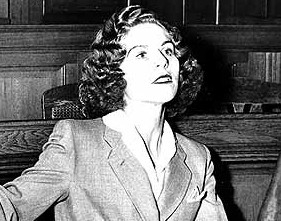
The Moorehouse book is not particularly well written or strikingly insightful, but it efficiently covers the ground. The story of Stella Kübler, the beautiful blonde Jewess who was used by the Nazis as bait to uncover Jews hiding in Berlin, chilled my blood. She was told that, by her collaborating, her parents would be saved, but unsurprisingly they were sent to the gas chambers anyway. She herself lived to an old age before she committed suicide. One solitary Jew was permitted to survive in the Jewish cemetery burying Jews according to Jewish practice. He was still alive when the Russians came. 

This is what a friend of mine calls Hitler porn but my excuse is that I know very little about German domestic history during the Nazi period, the subject is important and I am interested in biographies of cities, writing as I am one a book on Bucharest. 

Olivia Manning's third volume in the Balkan trilogy, set in Greece, which I reread while spending the weekend in Athens and Hydra, inclines me to think that the reason I like the first two so much is because of my love of and interest in Romania not Manning's writing. She does not create characters. Her characters are clearly drawn from life in many cases and therefore do not come alive. It is the invented ones like Yaki who live. 

Seton-Watson is magisterial and should be read by all foreigners who speak English in Romania. I am ashamed that I had only skimmed it before. I had never opened Treptow, which the author gave me in 1999, before he went inside, and had assumed it would be a facile popularisation but, despite the numerous mistakes and misspellings, it was a more vivid, condensed account than Seton-Watson and taught me rather a lot. Dennis Deletant tells me it was written by a  group of Romanian historians not by Treptow and completed very hurriedly - hence the mistakes and typos - so that Adrian Nastase, when he was Foreign Minister,  had copies to give away when he visited the USA.


Revolution 1989: The Fall of the Soviet Empire by Victor Sebestyen is journalism rather than history, but very interesting.


I read Here is New York, by E. B. White, because Johann Hari tweeted that it was the best essay of all time. It is not but it is very well written and might inspire me to write about Bucharest if I am lucky. But reading Remote People by Evelyn Waugh immediately after Here is New York makes Waugh's prose seem even more dazzling than usual. White is a very good stylist whom Waugh effortlessly outdoes. Although perhaps I am biassed as I 'get' English writers so much better than American ones. Americans speak our language but do not think like we do. And they write in English but not in the setting of the English class system, which always makes reading them seem eerie.

The Psychopath's Bible is a reminder that psychopaths, though amoral or rather immoral, have values they believe in, which they cannot be argued out of - might is right, survival of the fittest, victims want to be victims, selfishness is good, the ideas of Ayn Rand. A reminder that morality, like art, is inspired by love not logic.

'Tom' Holland went to my college years after me and took a Double First in Classics and History and has many books to his credit. I try not to be jealous, but he cannot write.

I haven't decided whether I love Gibbon yet - reading a book on a kindle makes love more difficult, for some reason - but I am enjoying him, though his paganism and contempt for the early church disgust me. He is a very good historian indeed. Cardinal Newman said, "It is melancholy to say it, but the chief, perhaps the only English writer who has any claim to be considered an ecclesiastical historian, is the unbeliever Gibbon."  


Four novels, which is much better than my usual score, although I am not sure the two Raymond Chandler thrillers really count.

Films seen

Six films is also much better than my normal score, which is none. None were any good, except In A Better World. Albert Nobbs was dull, pleasant but in the end a waste of time - please read George Moore's wonderful short story instead. George Moore is an unjustly neglected genius (like me).

The Blue Dahlia (1947)*
The Brasher Doubloon (1947)
Albert Nobbs (2011)
In a Better World (2011)
Thank you for Smoking (2005)
Goodbye, Lenin (2003)

Sunday, 14 October 2012

"In those days anyone who could write at all could have a living."

Novelist Evelyn Waugh


On writing, Waugh - the author of novels such as Vile Bodies, A Handful of Dust, Scoop and Brideshead Revisited - says he has always found it easy, "nothing easier". He adds: "In those days, perhaps even now, anyone who could write at all could have a living."


Thursday, 11 October 2012

My philosophy of life

Life is sweet, brother, who would wish to die? A gypsy speaking to George Borrow


There was a time when meadow, grove, and stream, 
The earth, and every common sight, 
To me did seem 
Apparelled in celestial light, 
The glory and the freshness of a dream. 
It is not now as it hath been of yore;— 
Turn wheresoe'er I may, 
By night or day, 
The things which I have seen I now can see no more.
William Wordsworth

He cried in the manger in wordless infancy, He the Word, without whom all human eloquence is mute. St. Augustine
Life is, I am sure, made of poetry. Jorge Luis Borges
God has determined, unless I interfere with His plan, that I should reach that which will be my greatest happiness. He looks on me individually, He calls me by my name, He knows what I can do, what I can best be, what is my greatest happiness, and He means to give it me. Cardinal Newman

The heart of the wise inclines to the right, but the heart of the fool to the left. Ecclesiastes 10:2

The theologians say the soul has no sex, but I wonder, I very much wonder. Coleridge

All we do our whole lives is go from one little piece of Holy Ground to the next. John Updike, about Salinger, in a review of Franny and Zooey

I like to be as my fathers were,; In the days e'er I was born. Wilfrid Scawen Blunt

I have met Frenchmen, Germans and Russians and even heard thanks to Montesquieu that there are Persians but I never met Man.
De Maistre 

I have been impressed with the urgency of doing. Knowing is not enough; we must apply. Being willing is not enough; we must do. Leonardo da Vinci

Dicebat Bernardus Carnotensis nos esse quasi nanos, gigantium humeris insidentes, ut possimus plura eis et remotiora videre, non utique proprii visus acumine, aut eminentia corporis, sed quia in altum subvenimur et extollimur magnitudine gigantea.

John of Salisbury

Your vision will become clear only when you can look into your own heart. Who looks outside, dreams; who looks inside awakens. Carl Jung

If the gospels are fictions then the writers are greater than the protagonists. Rousseau

'A nation is not an idea only of local extent, and individual momentary aggregation: but it is an idea of continuity which extends in time as well as in numbers and in space. And this is a choice not of one day, or one set of people, not a tumultary and giddy choirs; it is a deliberate election of the ages and of generations; it is a constitution made by what is ten thousand times better than choice, it is made by the peculiar circumstances, occasions, tempers, dis­positions, and moral and special habitudes of the people, which disclose themselves only in a long space of time....' - Edmund Burke

Things can be done. The people in life who get them done are the ones who know that, and the ones who don't are the rest. Tony Hawks

I travel a lot; I hate having my life disrupted by routine. Caskie Stinnett

He was created of a mother whom He created. He was carried by hands that He formed. He cried in the manger in wordless infancy, He the Word, without whom all human eloquence is mute. St. Augustine

It is the great achievement of Christianity in all times and places to have raised the condition of women. W.E. Gladstone

What do ties matter, Jeeves, at a time like this?
There is no time, sir, at which ties do not matter.
P.G. Wodehouse

Lord (Noel) Annan once recalled an occasion when a fellow peer quoted the famous lament of Sir Ranulph Crewe over the medieval nobility: "Where is Bohun, where's Mowbray, where's Mortimer? Nay, which is more and most of all, where is Plantagenet? They are entombed in the urns and sepulchres of mortality" — whereupon a voice piped up from the Conservative benches saying: "Mowbray is here!" "There, indeed," recalled Annan, "was the premier baron of England, fighting fit and at his place in that hour."

"Reaction. Obstruction, Stagnation" cited by CS Lewis as the motto of the Society for the Prevention of Progress.

Never hire anyone who is going to report directly to you who you do not intuitively just plain like. Charette 

A good traveller has no fixed plans and is not intent upon arriving. A good artist lets his intuition lead him where it wants. Lao-Tzu 

Hatred of Catholicism is the only genuinely religious emotion the English ever experience.

Cleverness is mere opinion, bewilderment is intuition. Rumi

Everything that irritates us about others can lead us to an understanding of ourselves. –Carl Jung 

In a progressive country change is constant; and the great question is not whether you should resist change which is inevitable, but whether that change should be carried out in deference to the manners, the customs, the laws and the traditions of a people, or whether it should be carried out in deference to abstract principles, and arbitrary and general doctrines. Benjamin Disraeli 


States shall provide effective mechanisms for prevention of, and redress for:
(a) Any action which has the aim or effect of depriving them of their integrity as distinct peoples

UN Dec. of Rights of Indigenous Peoples, Art. 8

Liberty does not consist in making others do what you think right. The difference between a free Government and a Government which is not free is principally this—that a Government which is not free interferes with everything it can, and a free Government interferes with nothing except what it must. A despotic Government tries to make everybody do what it wishes, a Liberal Government tries, so far as the safety of society will permit, to allow everybody to do what he wishes. It has been the function of the Liberal Party consistently to maintain the doctrine of individual liberty. It is because they have done so that England is the country where people can do more what they please than in any country in the world. Sir William Harcourt

It is not given to any of us to see more than a fraction of a shadow of the truth. Stanley Baldwin

Can an undying creature debit petty expenses and charge for carriage paid? The soul ties its shoes; the mind washes its hands in a basin. All is incongruous.
Walter Bagehot

An individual European may not even believe that the Christian Faith is true, but what he says and makes and does will all spring out of this history of European culture and depend upon that culture for its meaning. Only a Christian culture could have produced a Nietzsche or a Voltaire. I do not believe that the culture of Europe could survive the complete disappearance of the Christian Faith. And I am convinced of that not merely because I am a Christian myself, but as a student of social biology. T.S. Eliot

[William Trevor’s characters] know that what you are is determined not by a cheery self-assessment of the ‘real you’, still less by what you want for yourself, but by what you have done. Book review

They say I am against reform. I am not against reform. There is a time for everything. And the time for reform is when it can no longer be resisted.
 
Duke of Cambridge

It is only rarely that one can see in a litle boy the promise of a man, but one can almost always see in a little girl the threat of a woman. Alexandre Dumas fils

Contemplation often makes life miserable. We should act more, think less, and stop watching ourselves live. Comte Nicolas de Chamfort

The secret of being a bore is to tell everything. Voltaire

The past is attractive because it is drained of fear. Thomas Carlyle

No man can please others who does not please himself. Frederic Harrison

Mrs. Hardcastle: Ay, your times were fine times indeed; you have been telling us of them for many a long year ... all our entertainment your old stories of Prince Eugene and the Duke of Marlborough. I hate such old-fashioned trumpery.Squire Hardcastle: And I love it. I love everything that’s old: old friends, old times, old manners, old books, old wine; and I believe, Dorothy (taking her hand), you’ll own I have been pretty fond of an old wife.


Enoch Powell: ‘No, we do not fight for values. I would fight for this country even if it had a communist government.’Mrs. Thatcher (it was just before the Argentinian invasion of the Falklands): ‘Nonsense, Enoch. If I send British troops abroad, it will be to defend our values.’Enoch Powell: ‘No, Prime Minister, values exist in a transcendental realm, beyond space and time. They can neither be fought for, nor destroyed.’

My philosophy of life

Life is sweet, brother, who would wish to die? A gypsy speaking to George Borrow


There was a time when meadow, grove, and stream, 
The earth, and every common sight, 
To me did seem 
Apparelled in celestial light, 
The glory and the freshness of a dream. 
It is not now as it hath been of yore;— 
Turn wheresoe'er I may, 
By night or day, 
The things which I have seen I now can see no more.
William Wordsworth

He cried in the manger in wordless infancy, He the Word, without whom all human eloquence is mute. St. Augustine
Life is, I am sure, made of poetry. Jorge Luis Borges
God has determined, unless I interfere with His plan, that I should reach that which will be my greatest happiness. He looks on me individually, He calls me by my name, He knows what I can do, what I can best be, what is my greatest happiness, and He means to give it me. Cardinal Newman

The heart of the wise inclines to the right, but the heart of the fool to the left. Ecclesiastes 10:2

The theologians say the soul has no sex, but I wonder, I very much wonder. Coleridge

All we do our whole lives is go from one little piece of Holy Ground to the next. John Updike, about Salinger, in a review of Franny and Zooey
I have met Frenchmen, Germans and Russians and even heard thanks to Montesquieu that there are Persians but I never met Man.
De Maistre 

I have been impressed with the urgency of doing. Knowing is not enough; we must apply. Being willing is not enough; we must do. Leonardo da Vinci

Dicebat Bernardus Carnotensis nos esse quasi nanos, gigantium humeris insidentes, ut possimus plura eis et remotiora videre, non utique proprii visus acumine, aut eminentia corporis, sed quia in altum subvenimur et extollimur magnitudine gigantea.

John of Salisbury

Your vision will become clear only when you can look into your own heart. Who looks outside, dreams; who looks inside awakens. Carl Jung

If the gospels are fictions then the writers are greater than the protagonists. Rousseau

'A nation is not an idea only of local extent, and individual momentary aggregation: but it is an idea of continuity which extends in time as well as in numbers and in space. And this is a choice not of one day, or one set of people, not a tumultary and giddy choirs; it is a deliberate election of the ages and of generations; it is a constitution made by what is ten thousand times better than choice, it is made by the peculiar circumstances, occasions, tempers, dis­positions, and moral and special habitudes of the people, which disclose themselves only in a long space of time....' - Edmund Burke

Things can be done. The people in life who get them done are the ones who know that, and the ones who don't are the rest. Tony Hawks

I travel a lot; I hate having my life disrupted by routine. Caskie Stinnett

He was created of a mother whom He created. He was carried by hands that He formed. He cried in the manger in wordless infancy, He the Word, without whom all human eloquence is mute. St. Augustine

It is the great achievement of Christianity in all times and places to have raised the condition of women. W.E. Gladstone

What do ties matter, Jeeves, at a time like this?
There is no time, sir, at which ties do not matter.
P.G. Wodehouse

Lord (Noel) Annan once recalled an occasion when a fellow peer quoted the famous lament of Sir Ranulph Crewe over the medieval nobility: "Where is Bohun, where's Mowbray, where's Mortimer? Nay, which is more and most of all, where is Plantagenet? They are entombed in the urns and sepulchres of mortality" — whereupon a voice piped up from the Conservative benches saying: "Mowbray is here!" "There, indeed," recalled Annan, "was the premier baron of England, fighting fit and at his place in that hour."

"Reaction. Obstruction, Stagnation" cited by CS Lewis as the motto of the Society for the Prevention of Progress.

Never hire anyone who is going to report directly to you who you do not intuitively just plain like. Charette 

A good traveller has no fixed plans and is not intent upon arriving. A good artist lets his intuition lead him where it wants. Lao-Tzu 

Hatred of Catholicism is the only genuinely religious emotion the English ever experience.

Cleverness is mere opinion, bewilderment is intuition. Rumi

Everything that irritates us about others can lead us to an understanding of ourselves. –Carl Jung 

In a progressive country change is constant; and the great question is not whether you should resist change which is inevitable, but whether that change should be carried out in deference to the manners, the customs, the laws and the traditions of a people, or whether it should be carried out in deference to abstract principles, and arbitrary and general doctrines. Benjamin Disraeli 


States shall provide effective mechanisms for prevention of, and redress for:
(a) Any action which has the aim or effect of depriving them of their integrity as distinct peoples

UN Dec. of Rights of Indigenous Peoples, Art. 8

Liberty does not consist in making others do what you think right. The difference between a free Government and a Government which is not free is principally this—that a Government which is not free interferes with everything it can, and a free Government interferes with nothing except what it must. A despotic Government tries to make everybody do what it wishes, a Liberal Government tries, so far as the safety of society will permit, to allow everybody to do what he wishes. It has been the function of the Liberal Party consistently to maintain the doctrine of individual liberty. It is because they have done so that England is the country where people can do more what they please than in any country in the world. Sir William Harcourt

It is not given to any of us to see more than a fraction of a shadow of the truth. Stanley Baldwin

Can an undying creature debit petty expenses and charge for carriage paid? The soul ties its shoes; the mind washes its hands in a basin. All is incongruous.
Walter Bagehot

An individual European may not even believe that the Christian Faith is true, but what he says and makes and does will all spring out of this history of European culture and depend upon that culture for its meaning. Only a Christian culture could have produced a Nietzsche or a Voltaire. I do not believe that the culture of Europe could survive the complete disappearance of the Christian Faith. And I am convinced of that not merely because I am a Christian myself, but as a student of social biology. T.S. Eliot

[William Trevor’s characters] know that what you are is determined not by a cheery self-assessment of the ‘real you’, still less by what you want for yourself, but by what you have done. Book review

They say I am against reform. I am not against reform. There is a time for everything. And the time for reform is when it can no longer be resisted. Duke of Cambridge

It is only rarely that one can see in a litle boy the promise of a man, but one can almost always see in a little girl the threat of a woman. Alexandre Dumas fils

Contemplation often makes life miserable. We should act more, think less, and stop watching ourselves live. Comte Nicolas de Chamfort

The secret of being a bore is to tell everything. Voltaire

The past is attractive because it is drained of fear. Thomas Carlyle

No man can please others who does not please himself. Frederic Harrison

Mrs. Hardcastle: Ay, your times were fine times indeed; you have been telling us of them for many a long year ... all our entertainment your old stories of Prince Eugene and the Duke of Marlborough. I hate such old-fashioned trumpery.Squire Hardcastle: And I love it. I love everything that’s old: old friends, old times, old manners, old books, old wine; and I believe, Dorothy (taking her hand), you’ll own I have been pretty fond of an old wife.


Enoch Powell: ‘No, we do not fight for values. I would fight for this country even if it had a communist government.’Mrs. Thatcher (it was just before the Argentinian invasion of the Falklands): ‘Nonsense, Enoch. If I send British troops abroad, it will be to defend our values.’Enoch Powell: ‘No, Prime Minister, values exist in a transcendental realm, beyond space and time. They can neither be fought for, nor destroyed.’

Tuesday, 2 October 2012

'Oh, see the happy moron' and other quotations

Doubtfully attributed to, but surely not by, Dorothy Parker:


Oh, see the happy moron;

He doesn't give a damn.

I wish I were a moron.

My God, perhaps I am.


Authorship also unclear:

The rain falls on the just

And on the unjust fella,

But more upon the just because

The unjust stole the just's umbrella

1980s Romanian joke


Listener: Is it possible to foretell the future?
Radio Yerevan: Yes. We can predict the future with complete accuracy. It is only the past that keeps changing.


E.B. White
"There are roughly three New Yorks. There is, first, the New York of the man or woman who was born there, who takes the city for granted and accepts its size, its turbulence as natural and inevitable. Second, there is the New York of the commuter — the city that is devoured by locusts each day and spat out each night. Third, there is New York of the person who was born somewhere else and came to New York in quest of something ….Commuters give the city its tidal restlessness, natives give it solidity and continuity, but the settlers give it passion."

Hedy Lamarr 
"American men, as a group, seem to be interested in only two things, money and breasts. It seems a very narrow outlook."

Coriolanus:
"Let me have war, say I; it exceeds peace as far as day does night; it's spritely, waking, audible, and full of vent. Peace is a very apoplexy, lethargy: mulled, deaf, sleepy, insensible; a getter of more bastard children than war's a destroyer of men. "

Brideshead Revisited

 "We were joined by a Belgian Futurist, who lived under the, I think, assumed name of Jean de Brissac la Motte, and claimed the right to bear arms in any battle anywhere against the lower classes."
Clarke Kant

The same people that get excited by Mitt Romney also get excited by Argyle socks.

Charles Moore


On Thursday, I listened to the BBC News at seven in the morning after the first of the Obama/Romney US presidential debates three hours earlier. The report of the debate was only the third item on the news. So I knew, without having to hear any more, that Mitt Romney must have won. If Mr Obama had come out on top, the BBC would have led with the story.

 Mark Steyn
"Modern 'liberalism' is strikingly illiberal; the high priests of 'tolerance' are increasingly intolerant of even the mildest dissent; and those who profess to 'celebrate diversity' coerce ever more ruthlessly a narrow homogeneity." 
 Thomas Sowell
 "I have never understood why it is greed to want to keep the money you have earned but not greed to want to take somebody else's money."  

Jerzy Kosinski
"I detest the dismissal of the true drama of our life by the emissaries of the popular culture."

The philopsophers 

Beauty is a short-lived tyranny. ~ Socrates

Our care should not be to have lived long as to have lived enough. ~ Seneca

In order to improve the mind, we ought less learn than to contemplate. ~ Descartes
The superior man makes the difficulty to be overcome his first interest; success only comes later. ~ Confucius
 To fear love is to fear life, and those who fear life are already three-parts dead. Bertrand Russell
To change ones life: Start immediately. Do it flamboyantly. ~ William James

Nobody can give you wiser advice than yourself. ~ Cicero

By a lie, a man... annihilates his dignity as a man. Immanuel Kant


What then is freedom? The power to live as one wishes. ~ Cicero

It is not God's will merely that we should be happy, but that we should make ourselves happy. Immanuel Kant


I would not know what the spirit of a philosopher might wish more to be than a good dancer. ~ Nietzsche


There can be nothing more dreadful than that the actions of one man should be subject to the will of another. Immanuel Kant


It is good that I did not let myself be influenced. Wittgenstein


Nothing is so exhausting as indecision, and nothing is so futile. Bertrand Russell 


Immaturity is the incapacity to use one's intelligence without the guidance of another. Immanuel Kant

Anything you're good at contributes to happiness. ~Bertrand Russell

People are unconsciously aware that the customs of society embody more wisdom than could emerge in a single generation. Roger Scruton
A stupid man's report of what a clever man says can never be accurate, because he unconsciously translates what he hears into something he can understand. Bertrand Russell
To like many people spontaneously and without effort is perhaps the greatest of all sources of personal happiness. Bertrand Russell

The trouble with the world is that the stupid are cocksure and the intelligent are full of doubt. — Bertrand Russell. 

Not sure about the last one. Stupid people are more often right than the clever people and do very little harm compared with the philosophers.


Monday, 10 September 2012

Books read this year of grace 2012


The High Window*, Raymond Chandler
The Long Goodbye*, Raymond Chandler

Muhammad, Karen Armstrong
Stalingrad, Anthony Beevor 
Defying Hitler, Sebastian Hafner
Berlin at War: Life and Death in Hitler’s Capital 1939-45, Roger Moorehouse
This Business of Living: Diaries 1925-50*, Cesare Pavese
Relapse into Bondage, Alexandru Cretianu
Friends and Heroes*, Olivia Manning
Waugh in Abyssinia, Evelyn Waugh - I reviewed it here

As You Like It*, William Shakespeare
History of the Roumanians*, R.W.Seton-Watson 
A History of Romania, Kurt Treptow

Revolution 1989: The Fall of the Soviet Empire, Victor Sebestyen

Jeff in Venice, Death in Varanasi - Geoff Dyer
In Ethiopia with a Mule, Dervla Murphy - I reviewed it here
Tippu Tip: The Story of His Career in Zanzibar and Central Africa, Heinrich Brode
First Footsteps in East Africa, Richard Burton
The Emperor: Downfall of an Autocrat, Ryszard Kapuscinski - I reviewed it here
Here is New York, E. B. White
The Psychopath's Bible*, Christopher Hyatt
Remote People, Evelyn Waugh

The Diary of TerrorEthiopia 1974-1991, Dawit Shifaw 
Solitude*, Anthony Storr
Pagans and Christians Robin Lane Fox - I reviewed it here
The Shadow of the Sword. Tom Holland - I reviewed it here.
Decline and Fall of the Roman Empire, Edward Gibbon.

Bold means I loved it. An asterisk means I have read it before. 

What a masculine, middle-aged, rather philistine list. I am even reading military history, which is the last refuge of the middle-aged male. In fact I tried Beevor's Stalingrad on a recommendation from an aesthete friend but it bored and repelled me. 

I read Chandler for the prose style not for the plot, though he is a good storyteller. I thought when 14 that The Long Goodbye was too long and too much trying to be a proper novel. Now I absolutely loved it except the ending with the silly twist which I merely skimmed without attempting to understand it.

Karen Armstrong is not worth reading as she does not mention that the evidence for her subject's life is extremely late indeed (two centuries after the event) but the new book by Tom Holland on the origins of the Koran sounds good. Holland apparently went to my college years after me and took a Double First in Classics and History and has many books to his credit. I try not to be jealous.

Hafner's book, to my great surprise, an account of his uneventful life in Berlin in 1933, found among his papers and published ten years ago, is absolutely wonderful. It is beautifully written and deeply horrifying because of the sheer normality of his life as he describes it in Berlin in 1933 and the ease and rapidity with which Germans accepted Nazism and Nazi indoctrination. I hope it becomes a classic and is read in a hundred years' time as it deserves to be. People follow like sheep. I saw a somewhat faint parallel with another totalitarian ideology with a whiff of sulphur, political correctness, which has made cowards of us all in recent years. 

File:StellaKubler.jpg

The Moorehouse book is not particularly well written or strikingly insightful, but it efficiently covers the ground. The story of Stella Kübler, the beautiful blonde Jewess who was used by the Nazis as bait to uncover Jews hiding in Berlin, chilled my blood. One solitary Jew was permitted to survive in the Jewish cemetery burying Jews according to Jewish practice. He was still alive when the Russians came. This is what a friend of mine Madeleine Farrar-Hockley calls Hitler porn but my excuse is that I know very little about German domestic history during the Nazi period, the subject is important and I am interested in biographies of cities, writing as I am one a book on Bucharest. 

Olivia Manning's third volume in the Balkan trilogy, set in Greece, which I reread while spending the weekend in Athens and Hydra, inclines me to think that the reason I like the first two so much is because of my love of and interest in Romania not Manning's writing. She does not create characters. Her characters are clearly drawn from life in many cases and therefore do not come alive. It is the invented ones like Yaki who live. 

Seton-Watson is magisterial and should be read by all foreigners who speak English in Romania. I am ashamed that I had only skimmed it before. I had never opened Treptow, which the author gave me in 1999, before he went inside, and had assumed it would be a facile popularisation but, despite the numerous mistakes and misspellings, it was a more vivid, condensed account than Seton-Watson and taught me rather a lot. Dennis Deletant tells me it was written by a  group of Romanian historians not by Treptow and completed very hurriedly - hence the mistakes and typos - so that Adrian Nastase, when he was Foreign Minister,  had copies to give away when he visited the USA.


Revolution 1989: The Fall of the Soviet Empire by Victor Sebestyen is journalism rather than history but very interesting.


I read Here is New York, by E. B. White, because Johann Hari tweeted that it was the best essay of all time which it is not but it is very well written and might inspire me to write about Bucharest if I am lucky. But reading Remote People by Evelyn Waugh immediately after Here is New York makes Waugh's prose seem even more dazzling than usual in comparison with another fine stylist whom Waugh effortlessly outdoes. Although perhaps I am biassed as I 'get' English writers so much better than American ones. Americans speak our language but do not think like we do. And they write in English but not in the setting of the English class system which always makes reading Americans seem eerie.

The Psychopath's Bible is a reminder that psychopaths though amoral have values they believe, in which they cannot be argued out of - might is right, survival of the fittest, victims want to be victims, selfishness is good, the ideas of Ayn Rand. A reminder that morality, like art, is inspired by love not logic.

Sunday, 9 September 2012

In Ethiopia with Dervla and a mule


I made a very poor fist of researching Ethiopia before I went last month and I only read Evelyn Waugh's Waugh in Abyssinia and took Dervla Murphy's book, In Ethiopia with a Mule with me. 

Dervla  Murphy's story is wonderfully inspiring because she achieved her childhood ambition, which Freud said is the secret of happiness, even though it was a crazy one.

“On my tenth birthday a bicycle and an atlas coincided as gifts, and a few days later I decided to cycle to India...However, I was a cunning child so I kept my ambition to myself, thus avoiding the tolerant amusement it would have provoked among my elders.”


She left school at fourteen to look after her sick mother and spent her twenties doing so. When her mother died, she was free to travel and 'like an elastic stretched to breaking point' as she said, she immediately set out from Ireland for India by bicycle. In India she met Penelope Betjeman in the street. Mrs. Betjeman was fascinated but this Irish colleen who had made such a remarkable journey, loved her postcards and persuaded her to write. Jock Murray commissioned a book. Destiny and a great example of how the universe conspires to make you succeed, if you remain true to your true ambitions. 


It reminds me of the lines by Philip Larkin:

Sometimes you hear, fifth-hand,
As epitaph:
He chucked up everything
And just cleared off,
And always the voice will sound
Certain you approve
This audacious, purifying,
Elemental move.


Dervla (I can't call her Miss Murphy as I should) visited Ethiopia in 1966, when the Beatles were cutting records, England and Ireland had heavy pennies, shillings and half-crowns and other countries had small, lightweight decimal coinage. 1966 is a long time ago and a very long time ago in Ethiopia. 


The Emperor Haile Selassie was on the throne, of course, and in the countryside when Dervla went 99% of the country people were illiterate. When I went, the children, even the barefoot ones, spoke to me in English and asked me to test them on the names of the capitals of the world. (They got every answer right.)  

Sydney Greenstreet says to Humphrey Bogart in The Maltese Falcon, ‘By Jove, you are a character, sir!’ and by Jove so is Dervla Murphy. Her intention was to walk from the coast of Eritrea to Addis Ababa across mountainous and inhospitable terrain but her feet gave in at the outset and she was persuaded to take a mule whom she named Jock after her publisher. She has a keen sense of beauty and is observant and acute but it is her energy, courage and knack of getting herself put up in all sorts of unlikely kraals which make one read on.

"Within fifteen minutes I had been accepted by the settlement-as a most puzzling phenomenon, it is true, but also as someone to be fed, and joked with."

You do not read her for her prose style, although it is vigorous, clear and workmanlike. She is not a Fermor or an Evelyn Waugh. But you read her almost as much because of her as because of the places she visits.

‘It is not part of our culture to travel alone,’ an Ethiopian says to her and everywhere people try to provide her with bodyguards and guides. She represents, as the Irish sometimes do, an extreme example of Western individualism, whereas Ethiopia is a traditional society that thinks in terms of families, not individual fulfilment. I came to adopt the Ethiopians’ point of view. Why did she have to risk her life so often? One reviewer spoke of the ‘gothic levels of discomfort’ that she endured (often unnecessarily). One particular passage – she is on a narrow mountain ledge above a chasm with a reluctant mule - gave me vertigo just reading it, which shows she is a good writer but a foolhardy traveller. My unsympathetic feeling, after reading several accounts of difficult terrain, illness, exhaustion and unfriendly natives was – why not take the bus? In the end, after finding a man who was kind to his mules to adopt Jock, she does just that.


She was nearly murdered, while walking across a treacherous marsh, by some men led by a priest in full ceremonial robes and carrying a censer, who had made a career change and swapped the cure of souls for leading a gang of brigands. After being robbed but allowed to live (the priest had voted for killing her), she promptly almost died sinking in quicksand. The mule saved her by standing there (mulishly I suppose) while she clambered out pulling on his reins. This story ended happily. The police took her to the camp where the criminals were hiding and arrests were made - and beatings administered by the police about which she was very indignant. Evelyn Waugh would have had fun with this.


She hates the very faint signs of incipient tourism and complains about

"the corruption by Western superficialities of a non-Western mind which then quickly rejects its own traditions while remaining incapable of extracting any virtue from ours."
Lalibela had just started to get a daily tourist flight when she went and her irritation that it had recently acquired a hotel (the Seven Olives, where she and I stayed) is understandable, I suppose. In the 1950s Thomas Pakenham had been told Lalibela received only four or five tourist visits a year. Now Lalibela has several hotels, but it is still not yet spoilt, though it is no longer innocent. It is going through its Lolita phase.

I wonder what Dervla would think if she returned. I wonder too how much she really understood but what is important is what she saw, rather than what she understood. D.H. Lawrence started writing about Italy as soon as he arrived and this was right. He was writing about the feelings Italy inspired in him and this is what interests us. As Mircea Eliade said, we travel to explore our unconscious mind.  Ethiopians can write about how they believe things are and be right on details. They cannot know how things appear to an intelligent outsider from a more developed society.  

The Ethiopia she saw was not today's Ethiopia of fast economic growth. And, of course, it is not Communism, which led to murders and droughts, but 
capitalism (in some cases it is true thanks to Communist China) that is changing the country. The villages remain the same but the peasants now often wear clothes made by Chinese political prisoners and mobile telephones are transforming their universe very slowly but surely. In towns, internet cafes came five or ten years back and are doing their trade, though often with internet connections that rarely work. 


Dervla does not blame Hollywood or Western culture for the promiscuity she detects in many Ethiopians and this is a reminder that not all traditional cultures are chaste. I have read that in Africa before colonialisation, or even  eighty years ago, men and women were sexually conservative. Africa is a big place and perhaps Ethiopia is an exception. It seems to be from Dervla's account. A priest, with whose family she lodged in a kraal, offered her his daughter for the night, thinking his guest was a man. When the girl reached under Dervla's clothes and found a mistake had been made, Dervla and the whole family laughed uproariously.


In her day almost all infrastructure that was at all well constructed had been built by the Italians between 1936 and 1941 (it is still somewhat similar in Albania) and she reports that everywhere Ethiopians speak well of what the Italians had built. It is hard not to draw the lesson that colonialism benefitted Africa and would in many ways have benefitted Ethiopia Other accounts of the barbarity of Haile Sellassie's Ethiopia bear this out, including the Emperor's own account. But Ethiopia is the fascinating country she is because, unlike the rest of black Africa, she was only a colony for five years. (Liberia, the other apparent exception, was in reality for 150 years ruled by American colonists, who happened to be black.) And alone in Africa, and one wonders if this is because they are Semites, Ethiopians have a long history, an ancient church and had until recently an even more ancient monarchy. A  very old-fashioned, 
High Tory country (sex aside) and a fascinatingly strange one.