Sunday, 22 November 2015

Candidates are advised not to attempt this question


I remember my history master of genius, Dr Alan White, mentioned this history exam question
'Asquith was the last British Prime Minister not to travel by plane. Discuss'

saying drily (he said everything drily) we would be well advised not to answer this question.


Which reminds me of an exam question from Sellars and Yeatman 


' "Cap'n are't thou sleeping down below?" Candidates are advised not to attempt this question.'

Another exam question from the early 1970s
"The world owes more to Marks and Spencer's than to Marx and Spencer". 

I think Harold Wilson may have made that pun first, though he omitted Herbert Spencer.

A borderless world


I was on a bus - my ticket cost $1- going from Palmyra to Damascus and they were showing a BBC thriller with Arabic subtitles. TV in a bus was a novelty for me. I watched the mime. 


It was essentially a John Buchan type thriller, but the well dressed upper-middle class senior civil servant turned out at the end, inevitably, to be the bad guy. In place of the patriotic Rhodesian Richard Hannay, the brave, resourceful hero was a young black man. And I felt sorry, as I watched, for Al Qaeda, who I realised had no chance against global post-national culture.

American writer Gary Brecher put it very well.
Not everyone is like us, and a lot of people are actively trying not to become like us. Jihadis are, roughly speaking, the armed wing of that group. The truth about the clash of civilizations you hear people discussing is that it’s all the other way: The Mall is invading Islam, the Mall is taking over. There isn’t any Sharia Law in North Carolina, but there damn well are US-style malls in even the most conservative Islamic countries. 


Bill Clinton told Australians on Sept. 10, 2001 that he believed in 
the ultimate wisdom of a borderless world.
Borderless and with one global deracinated culture.

There is nothing but Western civilisation anymore, though it is ceasing to be Western, if Western means mostly white and mostly Christian. The future will be countries made of communities that do not comprehend each other, identity politics and an authoritarian state or superstate imposing approved behaviour. They will be bound together by pop music, Hollywood and a secular theology of human rights.

I think national borders (and languages) are wonderful and make freedom, democracy and a diversity of national cultures possible, but increasingly the borders are not between countries but within them.

The communications revolution means 
national identities are inevitably much less clear-cut than before. Increasingly, national independence is being subsumed by international law, international bodies and an internationalist political and business elite. Mass migrations are radically and quickly changing the rich world. 

I prefer a global post-national culture to Al Qaeda, but I don't like either. Come to think of it, Al Qaeda might appear to hate modernity but it is part of the global, post-national culture too and so is ISIS, which has now blown up a lot of Palmyra.


Monday, 9 November 2015

Romanian serial murderess Vera Renczi was a hoax by a future Pulitzer prize winner

Romanian women can be dangerous but the two most dangerous were in fact ethnic Hungarians. 

So it is said at least.

I have blogged before about female psychopaths and Romania, like every country, has plenty of them. 


Many know about the beautiful Transylvanian Countess Bathory, an ethnic Hungarian, who bathed, literally, in the blood of murdered virgins, but I had forgotten Vera Renczi, until I stumbled across a reference to her. She too was a stunningly beautiful woman and apparently one of the most prolific female serial killers in history. The usual account goes like this.

She was born in 1903 in Bucharest into a rich family. She left Romania at the age of 13, however, for the Serbian Banat (Voivodina) and she committed her murders there. Her family was ethnic Hungarian landed gentry. 

If she suspected her lovers, of whom there were many, were being unfaithful, which she regularly did, she gave them a dose of arsenic. Vera Renczi was convicted of murdering 35 men, including both her husbands and her son. who was ten and, she said, had discovered her murders. She is quoted as explaining that her son 

“had threatened to betray me. He was a man, too. Soon he would have held another woman in his arms.”
Otto B. Tolischus, an American journalist based in Berlin, who later won the Pulitzer prize, wrote that 
The victims were all between the ages of 23 and 30, except the boy. Fourteen of them were Roumanians.
He reported:
The complaint of a young married woman of the town that her husband, a leading banker, had disappeared after visiting Madame Renczi was the final stop that led the investigation of her career. Rumors of strangely missing men had been current for some time, but many persons feared to take action against the rich and distinguished widow, who seemed to exert a mysterious fascination over all who came contact with her. Nearly all the missing men were from distant places, and there was no relation at hand to investigate their disappearance. At last, came the pointed demand from banker’s wife that the police should search the cellar of Madame Renczi’s home, an ancient chateau. Realizing that the reputation of the town was at stake, the police acted with great energy. Before Madame Renczi had no idea of the charges against her they surrounded her chateau and broke into the cellar. To get there they had to go through long vaulted stone corridors and break through three iron doors. An old woman servant resisted their entry fiercely, and they were obliged to handcuff her. When at last they reached the vast, vaulted cellar an astounding sight revealed itself beneath the light of their electric torches. Neatly arranged around the cellar were no less than thirty-five zinc coffins, each of them bearing the name and age of the occupant. All the occupants were males. 
The police immediately arrested Madame Renczi, who had been trapped in her luxurious boudoir. She was taken before an examining magistrate on charges of causing the death of Leo Pachich, the banker, and other persons. Careful investigation showed that the coffins in the cellar bore the names of two of her husbands, of her young son [aged 10], and thirty-two men who had been her lovers. At first she boldly denied her guilt and protested with indignation at her arrest. “You have brought disgrace upon our town and I will have you all severely punished,” exclaimed the imperious beauty—with flaming eyes.

A full account is here. Very interesting but I am indebted to Douglas Muir for pointing out that it seems to have been an elaborate hoax. The existence of Madame Renczi has never been proven. Examination of contemporary Serbian news archives shows nothing about herThe online archive of the country's leading daily newspaper Politika, going back to 1904, does not seem to mention her nor do any other Serbian sources.

I presume it was made up by  the future Pulitzer prize winner, Tolischus.

This is journalistic behaviour worse than that of Sir Jocelyn Hitchcock in Evelyn Waugh's Scoop, who got out of the train in the wrong Balkan capital, went to his hotel and filed copy about a revolution from the wrong country, leading to a revolution really breaking out there. 
It was Hitchcock's greatest scoop.
At least Hitchcock was merely drunk.

Interestingly Tolischus in a 1940 book quoted Hitler as saying 
Whoever wants to understand National Socialist Germany must know Wagner
and this quotation has no evidence to support it any more than Madame Renczi has.

Friday, 6 November 2015

The boiled egg story

I told my boiled egg story just now for the first time in over 20 years and Andrei at the office laughed uncontrollably. Apart from him and my father no-one I told it to ever found it even faintly amusing which is possibly why I stopped telling it.

The late Norman St John Stevas told it to me. When Walter Bagehot was 3 he attended his first breakfast party given by his grandfather and there came across his first boiled egg. He stared at it in wonder and his grandfather said to him, 
'Hit it hard, Walter. It has no friends.'

 (Thought. Did he laugh because I am the boss?)

More quotations


"The world of the happy is quite different from the world of the unhappy."

Wittgenstein

"The happiest moment of the happiest man is when he falls asleep; and the unhappiest moment of the unhappiest man is when he awakes."


Schopenhauer

"All life death does end and each day dies in sleep."

Gerard Manley Hopkins

"Just as the soul sees but is not seen, so God sees but is not seen. Just as the soul feeds the body, so God gives food to the world." 

Cicero. He was a monotheist.

Sex is the mysticism of materialism.

Malcolm Muggeridge


Viscount Whitelaw, as he then wasn't, said the Labour government "are going up and down the country, stirring up complacency". He was widely misquoted as saying 'stirring up apathy'. I have seen this dated to the 1970 general election but am sure i remember it from the period when he was Mrs Thatcher's deputy in opposition between 1975 and 1979.

When asked how to make children proud of England Churchill said "Tell them Wolfe took Quebec". English children probably don't know this any more and if they did would disapprove.

"Don't criticise anyone till you've walked a mile in his shoes. By that time you'll be a mile away and you'll have his shoes."

Anonymous

Thursday, 5 November 2015

Things I read recently

"This book is a product of its time and does not reflect the same values as it would if it were written today. Parents might wish to discuss with their children how views on race, gender, sexuality, ethnicity, and interpersonal relations have changed since this book was written before allowing them to read this classic work."

Wilder Publications place this warning at the beginning of their editions of the US Constitution, Kant's Critique of Pure Reason, Chapman's Homer, The Wind in the Willows and numerous other books.


"Nobody can give you wiser advice than yourself."

Cicero

“I'm killing time while I wait for life to shower me with meaning and happiness.”

Calvin and Hobbes

"I have discovered that in discussions it never helps to take a morally superior tone to one’s opponent."

Nelson Mandela from Long Walk to Freedom, 1994 I kick against the sanctification of Mandela but he had great qualities, despite being a Communist and revolutionary.

"Women make up less than 1% of the garbage-collecting workforce in the US. I look forward to the campaign for a 50/50 gender split in this line of work."


Brendan O'Neil

"There’s no question to me that life is a circle. The longer we last the closer we feel to our beginnings. And the harder it becomes to determine the sensory from the sensible in terms of what we’re feeling. It’s one of the rare occasions where my atheist convictions are seriously challenged. How cleverly conceived, and how benevolent to us as a species, that as we edge towards the end of our days, instead of looking forward with boundless enthusiasm we find ourselves slipping back to past memories. Just as the overwhelming protective love we feel for a child is watered down by troublesome teenage years before we can bear to let our offspring leave us, so our expectation of life dims as we approach the ultimate cul de sac. If that’s not intelligent design it’s a hell of a coincidence."

Mariella Frostrup. I'm amazed that that lovely girl is fifty, am sorry for her that she's an atheist, like her argument for the existence of God, but I don't remember looking forward with boundless enthusiasm when I was in my teens or twenties - I have much more enthusiasm now and ever since my mid 30s.


"And for men too, there is, according to a famous authoress, a hope of freedom. Men are beginning to revolt, we are told, against the old tribal custom of desiring fatherhood. The male is casting off the shackles of being a creator and a man. When all are sexless there will be equality. There will be no women and no men. There will be but a fraternity, free and equal. The only consoling thought is that it will endure but one generation."

G.K. Chesterton.

Wednesday, 4 November 2015

Victor Ponta has resigned


Mr. Ponta said on television a few minutes ago that he was

"handing in my mandate, I'm resigning, and implicitly my government too. I hope the government's resignation will satisfy the people who came out in the streets."
I did not expect this quite so soon.

Nothing in his premiership became him like the leaving it. It was absolutely the right thing for him to do and a victory for the crowds last night. But when the National Liberals were in power there were no more fire escapes in bars than now.

As soon as Victor Ponta unexpectedly lost the presidential election in December by a large margin he became a lame duck, despite his majority in Parliament. Since then he has been indicted for corruption which led him to resign as leader of the Social Democrats (successors to the Communist Party) but not until today the premiership. His successor as Social Democrat leader, Liviu Dragnea, himself previously convicted earlier this year of vote-rigging, has regularly overruled and contemptuously humiliated Mr. Ponta.

Last night the squares of Bucharest were thronged by sombre crowds demanding the politicians be held accountable for the deaths of 32 (at the latest count) young people in a nightclub fire and the government's resignation. From my flat in the old town I could hear the periodic roaring of the crowd in University Square at 1 a.m. 

Today Mr. Dragnea said

"Victor Ponta is giving up his mandate. Someone needs to assume responsibility for what has happened. This a serious matter and we promise a quick resolution of the situation. You probably noticed thousands of people last evening and what they demanded."
Mr. Ponta resigned the party leadership but not the premiership because President Iohannis comes from the National Liberal Party and will try to avoid inviting a Social Democrat to form a new government, despite the party's majority in parliament. A long period of humiliating impotence for Mr. Ponta has come to an end. His position for the last few painful months was the opposite of what British Prime Minister Stanley Baldwin called 
"power without responsibility, the prerogative of the harlot down the ages."
Romanian politics is full of harlots, metaphorical and actual, but Mr. Ponta had the much less enjoyable prerogative of responsibility without power.

In keeping with this, Mr Ponta performs a final function as a sacrificial lamb, a sin-eater for the Government, the Social Democratic Party, the (robber) 'barons' who control the party machine in the counties and the entire, ghastly, compromised and incompetent Romanian political class. 

His resignation in itself is not very important. The President, who has been cohabiting with he man he defeated for the presidency 11 months ago, now has the chance to try to choose and create support for a Prime Minister from his own political camp, but even this is not really very important. 

What would be important - more important than who is Prime Minister or which party is in power - would be a change, it if came about, in what Romanian society is prepared to put up with. And I feel, after this victory for the people in the street, after this horrible tragedy and after the two-year-long onslaught of the Anti-Corruption Authority on the politicians, that this might be possible.

The man who knows talks about fire hazards in Bucharest

Thousands of people rally demanding government resignations as the death toll from a night club fire at the weekend reached 32, with dozens more in the hospital in critical conditions, in Bucharest, Romania November 3, 2015.  REUTERS/Inquam Photos/Octav Ganea

Bucharest is very deeply moved indeed by the deaths in the Colectiv nightclub. Tonight large well-behaved crowds line Bulevard Unirii and fill Piata Universitatii and Piata Victoriei. People are very angry and determined.

I tried to give blood today but the queue was too long and they said they didn't want any more people. A friend of a friend came to the office collecting money for things patients need, like nappies, that hospitals don't have.Tonight I hear occasionally a roar from the crowd a quarter of a mile away in University Square. There it is again now. It is 12.51 a.m. in the early hours of Wednesday morning.

I received this mail as a comment on my recent blog-post on the fire at the Collectiv club, which has killed, so far, thirty mostly young people. I think everyone should read it and I publish it with the author's permission. It's from one of the wisest and most experienced foreigners living in Bucharest.

Having been a visitor to young kids in a burns hospital when I was a teenager, I know the terrible havoc that fires wreak, and the suffering that the survivors then go through for the rest of their lives. 

Twenty years ago I gave up accounting to work as consultant for the BPB group and set up Rigips Romania for them. BPB was then the biggest manufacturer of plasterboard/plasters in the world and an early lesson that I learned with them was that 'a good fire' was the best seller of fire-resistant plasterboard. I learned how to build firewalls that hold back fire for 3-4 hours, but also learned that the wall is useless if the roof or the other walls allow the fire to 'go around'  Firewalls stop flame but don't hold back smoke and it is nearly always the smoke and not the flame that kills. 

I watched videos of building fires to get an idea how they start and how unbelievingly quickly they travel, but I also know that in the split second that you open a 'life-saving' fire escape you also feed the fire. Added to all that, people don't act normally in a fire. On Saturday I heard an interview with the guy who did recent building work in the club. He mentioned that the owner didn't want to pay the extra for fireproof painting, but he himself fitted the wooden slats that hung under a "polystyrene ceiling that had believed to have been recently cleaned and probably with a solvent" !! He was contributing to the classic death trap. Me...? I would have walked off the job.... but I would also have passed on a warning.  

I can see the fire in my mind's eye.... firework sparks ignite the polystyrene on the column and flame rushes to the ceiling. Even without the impregnated solvent the flame travels laterally faster than you and I can walk, the smoke is acrid and poisonous but globs of fiery molten polystyrene fall on everyone so driving the panic. At that point a hundred extinguishers held by a hundred fire-protected men couldn't put out a fire now burning at 800C.  but now the second door to the outside is opened..... and there is a loud and terrifying WHOOSH... 

You mention inspectors and fudged inspections but the problem is much wider than that. 
Fire engulfed a wooden stand at Bradford Football ground in 1985 and some folk in the stand remained seated, paralysed with fear. Back in 1973 a fire in Summerland, a brand new shopping/sports complex on the Isle of Man killed 50 and injured 80. In 1987 a terrible fire in the Underground station at King's Cross killed 27 and injured scores more. All of these places had been recently "inspected"...... but if the inspector is a functionary with a tick list..... he is missing the plot. Fire extinguishers are useless

Your assumption about a lack of fire escapes in many clubs and restaurants is very close to the mark but the paramount exercise is NOT HAVING TO USE THEM, ie. preventing a fire from happening or spreading is what it is all about. There ARE fire regulations in place here and there ARE norms regarding building materials. They might be old, but if they had been in application, I am sure that the fire on Friday would not have started. In Romania too,  "ignorance of the law excuses no man"... so the primary responsibility lies with the owner/operator to know the law or to b advised by someone who does.

Six or seven years ago someone that you and I both know took on a pub in Bucharest and asked me to do some building work on the kitchen, When I went to the pub the first thing I noticed was the ceiling made from wooden strips and very dry sacking hanging down from it. A cigarette in a raised hand would be enough to start a fire and make the place an inferno in seconds. I made my point and was largely ignored, but he has since moved to another pub.....which has just one way in and one way out !!     I for one won't go in there..

Four years ago I worked on another pub, with an Irish owner and and Irish building supervisor. Here there was a fire exit at the back, but it led into a yard that had steel gates to the street that were chained on the OUTSIDE by a company that ran a security business. I put the case that even if people escaped into the yard they wouldn't be able to get away from the smoke and the crush, and emergency services would be delayed in getting to them. I was politely asked to get on with my building works..!!

WE ALL KNOW that there is insufficient water pressure in the Historic Centre  to supply the Fire Service in the case of a major fire, and WE ALSO KNOW that people-packed streets slow down the firemen even getting to a fire. A big fire on Gabroveni two years ago was 'proof of that pudding' but left the firemen arguing with the Man from Apanova.
Official enquiry...? Anything done..?

It isn't just a case of bent inspectors and spagi. It is far wider than that. It is the application of old unrealistic or unworkable safety norms, it is using simple tick lists for inspections, it is not 'nailing' slack or bent inspections, but above and beyond all, UNTIL NOW it has been allowing the owner/operator the latitude to be ignorant and to get away with it ...!!!  But now, all of a sudden and a bit too late we are going for Omor Calificat ......... Murder..... and life sentences.  


I won't sit inside a place that has a single entrance and exit because I know the risks. By the same token, we have to make people generally more aware of the risks they are taking..... and I would be all for your mate setting up some form of green and red codes in his guide............. even if setting it up would cost the 'inspectors' a black eye here and there.

Tuesday, 3 November 2015

"I am thy father's spirit" - poetry is what gets lost in the translation

Still on the them of Hallowe'en, vampires and ghosts, the line in Hamlet Act 1 Scene 5, 
"I am thy father's spirit" 
was translated into Afrikaans as: 
"Ek is die pappa spook."
I am not sure if this is true but I hope it is. It certainly ought to be.

I read this in John Julius Norwich's inimitable Christmas Crackers, a strong candidate for my all time favourite book.
Poetry is what gets lost in the translation
said Robert Frost and that's the best definition of poetry that I know. 

Note: my Afrikaaner friend Carmen Jurgens has confirmed that 


"Ek is die pappa spook" 

is a perfectly possible translation of the line from Hamlet. 

Sunday, 1 November 2015

Guenter Schabowski, who ended the Cold War by mistake, has died

It was announced today that Mr. Guenter Schabowski, who by mistake opened the Berlin Wall and ended the Cold War, has died at 86. It seems very recent to me. 

Schabowski, a member of and spokesman for East Germany's Politburo, was speaking at a routine news conference on November 9, 1989, when he was asked about travel rules. Pressure had been building on the East German government for months to let its citizens travel to the West. The clearly under-prepared Schabowski stunned the journalists with his answer.

"Therefore... um... we have decided today... um... to implement a regulation that allows every citizen of the German Democratic Republic... um... to... um... leave East Germany through any of the border crossings."
He was then asked when the new rule would take effect. He shuffled through the papers spread in front of him as he searched in vain for the answer to the question. So he extemporised.
"According to my information... immediately, without delay."
It later emerged the announcement was not supposed to be released until 4 a.m. the next morning and he was meant to say that East Germans could apply for visas in an orderly manner at the appropriate state agency. Instead ecstatic East Berliners flocked to the Brandenburg Gate, where border guards did not know what to do. The officer in charge at the gate decided that using bullets to stop the crowd would be disastrous and so allowed them to go through. The rest, as they say, is history.

Schabowski wasn't making an artful mistake. He was not very bright.Some of the high-ranking Communists were very clever men but most (think of Ceausescu) were anything but. Imagine an army of John Prescotts.

Early in 1990 Schabowski was excluded from the Party of Democratic Socialism (PDS), the renamed Communist Party. In 1997 Schabowski and two other Politburo members were gaoled on charges of tolerating the former regime's fatal shootings of escaping East Germans along the border. Unlike six other accused former Politiburo members, Schabowski said during the trial that nothing could justify that "even a single person" had had to pay for trying to flee with his or her life. He was pardoned in 2000.

Thus ended the German Democratic Republic. 25 years later another East German, Angela Merkel, has made a very much greater mistake, also without consultation or careful thought, by allowing what will turn out to be up to four or even six million Arabs into Germany.

Could something good come out of the bloodbath at Colectiv?


Bucharest is a tiny place - despite its 1.9 million inhabitants everyone knows everyone or so it seems. Three friends of friends of mine were in the nightclub Colectiv on Friday night and two of them have died, one heroically on Friday, one today.

In all three victims died today, bringing the death toll to 30. The Minister of Health, Nicolae Banicioiu, said between 80 and 90 percent of the 140 victims in hospital are in serious or critical condition. Secretary of State Raed Arafat told Romania to be prepared for twenty or thirty more deaths, though "that does not mean that it will happen”.

This incident means more than it would in England, France or America because Romanians are not used to terrorism or the kind of mass killings America regularly experiences.  Let's hope Romania doesn't experience a terrorist atrocity, although it is more likely than not that she will. Still, Bucharest, even if it escapes the terrorists, are due an earthquake any time now, in which thousands, not dozens, will probably die. What will happen then? The accident and emergency units in the city's hospitals were stretched to breaking point on Friday night and Saturday morning.

What will happen now is that sorrow will turn to anger. The corrupt, inept state will get the blame for this massacre and deservedly so. A state run by corrupt, inept politicians and corrupt, inept civil servants could not ensure, despite its Kafkaesque bureaucracy and battalions of officials, that nightclubs and bars have fire escapes that work. Thirty fine young men and women died because of slothful, compromised, unintelligent middle-aged ones. 
Health and safety in Bucharest is a complete joke and we all know a terrible tragedy like this was inevitable. I'd imagine, at an informed guess, that most of Bucharest’s restaurants and clubs do not have adequate fire escapes. Colectiv had none at all and the same I am sure is true of many others.


Craig Turp, the Englishman who edits the invaluable restaurant and bar guide, Bucharest In Your Pocket, said today:
Perhaps we should add a ‘Fire escape’ symbol to our listings in Bucharest In Your Pocket, so people know if they are dicing with death when they enter a club.
He was probably joking but it's a very good idea.

I am always accused of seeing Romania through rose tinted spectacles and it is absolutely true that I do, so I was the more shocked when a friend of mine told me how he watched his son die, while the ambulance took almost an hour to reach him, even though the distance it was coming was not far. The emergency workers had told my friend not to administer the kiss of life to his son and he obeyed them.

Until the Colectiv tragedy, Romania had been talking very angrily for a week about a police motorcyclist who died when his motorbike hit a pothole in the middle of Bucharest. The dead man and a large cortege of police were accompanying the Deputy Prime Minister while he went shopping. Perhaps this one policeman's death, the thirty deaths at the club this weekend and the deaths of the people in hospital, that are to come over the next few days, will cause a moral revolution.


Or accelerate one rather, one that started with the work of the Anti-Corruption Agency (DirecÅ£ia NaÅ£ională AnticorupÅ£ie or D.N.A.). The D.N.A. is or has been prosecuting very many of the richest and most powerful Romanians for corruption, including four of Bucharest's seven mayors, who keep popping in and out of gaol, and even the incumbent socialist Prime Minister, Victor Ponta. This revolution received a fillip when Klaus Iohannis, an ethnic German provincial mayor, who is perceived as honest, unexpectedly defeated the same Victor Ponta to become president.


American politicians say that you should never let a serious crisis go to waste. I hope Romanians don't. I hope from this awful tragedy something good can be born. President Iohannis has not done anything very noticeable since he entered office last December. Now is his moment.

Saturday, 31 October 2015

Hotel Continental, Cluj

I stayed in the Hotel Continental in Cluj once, in 2004, in a beautiful first floor room overlooking the square. Patrick Leigh Fermor drank in the bar in 1934. A wonderful old-fashioned hotel. I am told it has been closed for a long time for renovation and I fear the worst. At the very best its ghosts will be exorcised.

Thursday, 29 October 2015

The new religion

This is an interesting article by an Anglican clergyman, written in 2009, headlined
Britain is no longer a Christian nation.
The Rev. Paul Richardson says
Disestablishment will actually pose major problems for society. Every country needs shared rituals and celebrations to foster a sense of community and provide a backdrop to major national occasions. 
We are going to have to invent a new civil religion. Already the process has begun with the observance of Holocaust Day and increasing focus on Human Rights as providing a shared basis for morality.
This is exactly what is happening in Britain, where Christianity is in steep decline and other religions are flourishing thanks to large-scale immigration. We are seeing a new secular religion based on human rights, many of which are entitlements rather than freedoms, and are in fact restrictions on the freedoms of other people, such as employers, for example. We are also seeing welfare considerations taking the place of the sacred.
I again quote Edward Norman, whom I consider the greatest living Englishman and our best historian. He was an Anglican Low Church clergyman, who in the end has become a Catholic.
"Extraordinarily enough, the leaders of the Church manage to identify the present welfare idealism - which is based in Humanist materialism - as fundamental Christianity, an application of the love of neighbour enjoined by Christ. But preoccupation with material welfare, whatever higher considerations may become attached to it, cultivates worldliness, and is an enemy of authentic faith."

"The Churches themselves, in fact, have rushed to acclaim the new humanism - the `caring society - as the very essence of Christianity. But it is actually quite pagan, concentrating as it does on the merely worldly needs of people in a way which is plainly contrary to the renunciations indicated in the teachings of Christ. This is not an academic matter. For when Christians identify the present secular enthusiasm for humanity as basic Christianity - the love of neighbour - they are in reality acclaiming and legitimising their own replacement."

Charles Glass on the origins of the Syrian war

I have been saying that, unlike the disastrous chaos in Iraq and Libya, the war in Syria cannot be blamed on the USA, the UK or France. It pains me to read about a lecture given by foreign correspondent Charles Glass, in which he argued that this might be my mistake.

He said that the U.S., Britain and France had long harboured a wish to get rid of the Syrian regime. When the Syrian revolution began, his contacts in the opposition told him they were determined to keep the movement non-violent, “to use a strategy the regime couldn’t cope with”: mass civil disobedience and general strikes. Instead, they told him, the Western powers and their allies, Saudi Arabia, Qatar and Turkey “persuaded members of opposition to take up arms, and turn peaceful demonstrations in a civil war.”
Is this true?  It is impossible to know but it must reflect how some people in the 'moderate rebel' camp remember it. Some in the opposition might have interpreted the declarations by Mr. Obama and Mrs. Clinton that "Assad must go" as a sign of support for them to remove Assad by any means. it is widely believed that the Qataris and Saudis were pumping in weapons from early on in the "Syria spring".

Glass pointed out that  if the United States and its Islamist regional allies prevail, “that means Jahbat al Nusra [al Qaeda’s Syria affiliate] wins, Syria will be religiously cleansed, and its people will be enslaved to an ideology they don’t believe in.” This is exactly what I have thought for years. He thinks total victory for Assad (surely impossible?) would mean a bloodbath. But a bloodbath is what is happening at the moment.

On the current trajectory, Glass said, the most likely outcome is not victory for either side, but “a long and bloody war with a big impact on Europe that endures as a problem in U.S. foreign policy for years to come.” 

I imagine this is what will happen. But if Iran, Saudi Arabia, the USA, and, I suppose, Russia were to come to a deal a peace could come quickly.

In an interview on Monday Mr Glass said:the US is still allowing the Saudis to give weapons to the Islamic State and other jihadist groups, including anti-tank weapons.

Either this is fine with American policy and consistent with it, or they’ve simply lost control over the course of events.

Tony Abbott urges Europe to close its borders

This week we learnt that 710,000 asylum seekers have arrived in the EU so far this year. 38% were (apparently) Syrians. This is an historical event as important as the end of the Cold War.

Tony Abbott until five weeks ago was the Liberal [Australian equivalent of Conservative] Prime Minister of Australia. On Tuesday night at the Guildhall in London, before an audience that included many British cabinet ministers, he delivered  the Margaret Thatcher Centre's annual Margaret Thatcher Lecture.

Tony Abbot is a devout Catholic and was a Catholic seminarian. He had these words to say about how the West should deal with migrants, which are worth two minutes of your time.

Implicitly or explicitly, the imperative to "love your neighbour as you love yourself" is at the heart of every Western polity. It expresses itself in laws protecting workers, in strong social security safety nets, and in the readiness to take in refugees. It's what makes us decent and humane countries as well as prosperous ones, but – right now – this wholesome instinct is leading much of Europe into catastrophic error.

All countries that say "anyone who gets here can stay here" are now in peril, given the scale of the population movements that are starting to be seen. There are tens – perhaps hundreds – of millions of people, living in poverty and danger who might readily seek to enter a Western country if the opportunity is there.

Who could blame them? Yet no country or continent can open its borders to all comers without fundamentally weakening itself. This is the risk that the countries of Europe now run through misguided altruism.

On a somewhat smaller scale, Australia has faced the same predicament and overcome it. The first wave of illegal arrivals to Australia peaked at 4000 people a year, back in 2001, before the Howard government first stopped the boats: by processing illegal arrivals offshore; by denying them permanent residency; and in a handful of cases, by turning illegal immigrant boats back to Indonesia.

The second wave of illegal boat people was running at the rate of 50,000 a year – and rising fast – by July 2013, when the Rudd government belatedly reversed its opposition to offshore processing; and then my government started turning boats around, even using orange lifeboats when people smugglers deliberately scuttled their vessels.

It's now 18 months since a single illegal boat has made it to Australia. The immigration detention centres have-all-but-closed; budget costs peaking at $4 billion a year have ended; and – best of all – there are no more deaths at sea. That's why stopping the boats and restoring border security is the only truly compassionate thing to do.

Because Australia once more has secure borders and because it's the Australian government rather than people smugglers that now controls our refugee intake, there was massive public support for my government's decision, just last month, to resettle 12,000 members of persecuted minorities from the Syrian conflict – per capita, the biggest resettlement contribution that any country has made.

Now, while prime minister, I was loath to give public advice to other countries whose situations are different; but because people smuggling is a global problem, and because Australia is the only country that has successfully defeated it – twice, under conservative governments – our experience should be studied.

In Europe, as with Australia, people claiming asylum – invariably – have crossed not one border but many; and are no longer fleeing in fear but are contracting in hope with people smugglers. However desperate, almost by definition, they are economic migrants because they had already escaped persecution when they decided to move again.

Our moral obligation is to receive people fleeing for their lives. It's not to provide permanent residency to anyone and everyone who would rather live in a prosperous Western country than their own. That's why the countries of Europe, while absolutely obliged to support the countries neighbouring the Syrian conflict, are more-than-entitled to control their borders against those who are no longer fleeing a conflict but seeking a better life.

This means turning boats around, for people coming by sea. It means denying entry at the border, for people with no legal right to come; and it means establishing camps for people who currently have nowhere to go.

It will require some force; it will require massive logistics and expense; it will gnaw at our consciences – yet it is the only way to prevent a tide of humanity surging through Europe and quite possibly changing it forever.We are rediscovering the hard way that justice tempered by mercy is an exacting ideal as too much mercy for some necessarily undermines justice for all.

The Australian experience proves that the only way to dissuade people seeking to come from afar is not to let them in. Working with other countries and with international agencies is important but the only way to stop people trying to gain entry is firmly and unambiguously to deny it – out of the moral duty to protect one's own people and to stamp out people smuggling.

So it's good that Europe has now deployed naval vessels to intercept people smuggling boats in the Mediterranean – but as long as they're taking passengers aboard rather than turning boats around and sending them back, it's a facilitator rather than a deterrent.

Tuesday, 27 October 2015

Death of a minor literary man


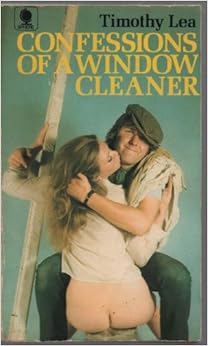
The author of the Confessions [of a Window-Cleaner, etc.] series was a Cambridge man. Who knew? Christopher Wood died at the same time as Michael Meacher, Lisa Jardine and Maureen O'Hara, in what the headmaster in Alan Bennett's 'Forty Years On' (John Gielgud in the original version, Paul Eddington in the one I saw) called 
'the magnificent equality of death'. 
Michael Meacher's obituary was as dull as the man. Maureen O'Hara's I haven't read but she probably had more sex than Mr. Meacher - possibly more than the window cleaner for aught I know.

Henri de Montherlant wrote about all the people who lead utterly different lives and who die at the same moment. Did he make an analogy with birds suddenly migrating to the other side of the world? I don't think he did and if not I am doing so.

Saturday, 24 October 2015

48 hours in Lebanon

I love Arab cities. I love that certain smell they have.

TAROM in February had a special offer selling return tickets to most of its destinations for EUR 100  for dates throughout the year and I, somewhat unthinkingly, bought a ticket to fly from Bucharest to Beirut this weekend. I arrived here at 2.15 on Friday morning. I'm dismayed to find my plane back leaves tonight, or rather tomorrow, at 3.30 a.m. This no longer seems such a good idea.


The streets have no lamps but busy streets are lit intermittently by shop windows. Staying up for the plane I'm whiling time in the terrace of Bricks, which flanks a dark street. It's a fun bar popular with expats and UN people (UN people and USAID people and international organisation people bestride developing countries like collosi, but the prices at Bricks are no dearer than anywhere else, which means London prices). I got talking to a nice Syrian who insisted on standing me a drink and told me Russia's intervention in Syria might be positive. The Syrian regime recognises that it is stronger but no longer autonomous. Russia certainly cannot win the war for the regime, has an interest in the regime surviving but not necessarily in Assad surviving. 


Had he met Assad? Yes many times in small meetings and he is 'useless, completely useless, a really poor quality person". His wife, "a complete bitch, a horrible person, is much smarter". I suggested that Assad is mere a front man for the gang in power and my new friend agreed


What he said is what I had imagined. I said that whatever happens a democratic election would be a disaster because it would bring Sunni Islamists to power as in Egypt and, had the army not intervened at the cost of huge loss of life, Algeria. He wholeheartedly agreed.


I asked the driver of the first taxi I took about the refugees from Syria. They cause no problems, he said, "but we are a poor country". Then he mentioned the migrants in Europe and without stating mine I asked his opinion."It's very bad. I lived in Italy for ten years and know what they're like. They're thieves and bad people." I asked him his religion, a question that I know can cause offence in the Lebanon, to check for anti Muslim bias. "I'm half and half. My father's Muslim, my mother's Christian".

The migrantophobe taxi driver asked me if I liked Porsches but my answer that I take no interest in cars killed that gambit, so he asked me if liked women, and satisfied that I did very much, said 'Women are the life.' Which I suspect is true. What did Aldous Huxley say about intellectuals and sex?

Don't come to Beirut for the monuments. Come, instead, for the restaurants, bars, if you like bars, and clubs if you like clubs. 

Wandering around the new, rebuilt, old town in Beirut (the original was destroyed in the war) is hard to do. Things are cut off by barbed wire and armed soldiers are everywhere. It smells of death and the rebuilt cathedrals and mosques have no charm for me. I did enjoy a signpost in French that read, 'The Grand Seraglo: Presidency of the Council of Ministers'. I climbed the steps to find the Seraglio but the way was barred by barbed wire.

The one sight that is worthwhile is the wonderful National Museum which I loved when i was here fore a few hours in 2006 but it was closed today because of a public holiday. For which I am glad as it made me venture out to Byblos instead and, better than Byblos, see the amazing Jeita Grotto. Some of the statues in the National Museum are extremely beautiful, but nothing man-made compares to the Grotto - and I speak as one who usually prefers the works of man to God.


The food is great. Breakfast at my hotel (a rare affordable one in the centre, the Mayflower) included delicious foul and sublime tomatoes that were poems. Like tomatoes used to be in Romania ten or fifteen years ago. There are many ways in which Romania has deteriorated not advanced. Vegetables, fruit, meat and not by any means just food.


Thursday, 22 October 2015

Jeremy Corbyn as Ramsay Macdonald


He does not look bad in white tie unlike John Major, who looked absurd - but then Mr Corbyn is from a good family. he doesn't look good but much better than John Major.

He doesn't look like Compo in white tie, at any rate. There is usually a resemblance, though Compo was much more benign. 

But the Spectator says he caused offence by texting from his telephone over dinner - a breach of protocol.

What is frightening is that there are people who actually welcome Mr Corbyn as leader and genuinely think he might be Prime Minister and think that would be a good thing. Robin Lustig, who until recently read the news on BBC Radio 4, thinks so. So does Canon Giles Fraser late of St Paul's and now of the Guardian. So do a lot of respected intellectuals. It is very dismaying that, unlike agreeing with Viktor Orban, there is no stigma attached to liking Corbyn.
Martin Amis at least does not. In an article in The Sunday Times, he called Mr Corbyn humourless.
Many journalists have remarked on this, usually in a tone of wry indulgence. In fact it is an extremely grave accusation, imputing as it does a want of elementary nous. To put it crassly, the humourless man is a joke - and a joke he will never get.  
He is undereducated. Which is one way of putting it. His schooling dried up when he was 18, at which point he had two E-grade A-levels to his name; he started a course at North London Polytechnic, true, where he immersed himself in trade union studies, but dropped out after a year. And that was that....
...To my eyes, he doesn't have the eager aura of an autodidact. It is a fair guess that his briefcase, or his satchel, contains nothing but manifestos and position papers.
Mr. Blair looked at ease in white tie, but Mr Cameron looks wonderful in it, exactly as if he wore it every night, even when dining alone.

I remember reading the obituary of a bachelor duke who always wore white tie even when dining alone, which he usually did. One can't pretend that England is not in decline now that dukes introduce themselves by their Christian names.


Monday, 19 October 2015

Hearing the birds sing

A little boy sees and hears birds with delight.

Then his “good father” comes along and feels he should “share” the experience and help his son “develop.” He says: “That’s a jay, and this is a sparrow.”

The moment the little boy is concerned with which is a jay and which is a sparrow, he can no longer see the birds or hear them sing. He has to see and hear them the way that his father wants him to.

Father has good reasons on his side, since few people can afford to go through life listening to the birds sing, and the sooner the little boy starts his “education” the better. Maybe he will be an ornithologist when he grows up.

A few people, however, can still see and hear in the old way. But most of the members of the human race have lost the capacity to be painters, poets, or musicians, and are not left the option of seeing and hearing directly even if they can afford to; they must get it second-hand.

The recovery of this ability is called “awareness.”

Eric Berne


Saturday, 17 October 2015

A Syrian refugee talks to me about Syrian refugees

I think it's useful to report what a Syrian Christian friend of mine, who fled to Bucharest from the war, has to say about her fellow Syrian refugees. She is an intelligent and honest woman in her thirties, married with children,

She said to me tonight via Facebookthat demographic changes have consequences and Syrians know better than other people what effects large numbers of Syrian refugees might have. She worries about how Europe will being changed by Muslim refugees and said that, before the war,
In Aleppo there were neighbourhoods where even the state could not go into unless really armed. They are the people who throw themselves into the sea and become asylum seekers.
It is good that Germans are extending help to refugees. We are refugees as well. But Germans have to be careful. This might change Europe. In London my cousin says she cannot go to fully Muslim neighbourhoods wearing skirts or having drinks. In Syria I used to get harassed only for not being veiled. Men used to follow me and try to touch me. They threw acid on my friends. Just for not being veiled.
Germans need to hire more policemen and spend more on covering immigrants' expenses. I don't argue with this. But having a domestic lion is not like having a domestic cat.
Muslims in general still have the idea of conquering Europe and imposing Islamic laws. Many videos on YouTube testify to this. They all came to Europe as pacific migrants. They have to be controlled.
Substituting populations is not the answer.

All Muslims think about is their religion, unlike West European governments.

No one in the Middle East sees that the interest of a country in general is more important than their religious loyalty.
My friend says she is terrified of the Islamisation of the West and blames Muslim voters for the change of government in Canada this week. I wonder how many Syrian, Lebanese, Egyptian and Iraqi christians agree with them.

Things worth repeating that I recently read

'The essential American soul is hard, isolate, stoic, and a killer. It has never yet melted.' D.H. Lawrence. 
I think of it as childlike. Certainly it's Protestant, possibly Calvinist.
'…this dreary Welsh Methodist bastard of a screw – not that I have anything against any particular kind of bastard, but that is the kind of bastard that he is.'
Brendan Behan, Borstal Boy
 
'He is a very shallow critic who cannot see an eternal rebel in the heart of a conservative.' G.K. Chesterton 
'Good is something you do, not something you talk about.' Gino Bartali
'I’m hungering to hear, to be told, and to receive, things which I don’t know where to find elsewhere, and which I feel I shall be the poorer if I don’t hear and receive, and which I feel in some sense I shall die if I don’t have.' Enoch Powell, No Easy Answers (London: Sheldon Press, 1973), in answer to the question, 'Do you consider yourself a religious man?'  
'Nineteenth-century historians, as Herbert Butterfield reminds us, took seriously the task of researching and writing “objective” history. I recall seeing traces of this in an Orthodox Jewish lady I had as graduate student in the early 1970s at NYU. This woman had planned to do a dissertation on the fate of Jewish communities in Galicia in the twentieth century but then abandoned her topic. The reason she gave made me respect her forever: She refused to prepare a dissertation on a subject she could not treat with the proper degree of objectivity. This refusal would now be ascribed in all likelihood to inexcusable moral indifference. Truly sensitive historians, we are told, should have zero tolerance for reactionary rule or for what until recently were considered natural hierarchies....What they consider to be scholarship is a form of proselytizing—or a means of helping the practitioner advance professionally by means of useful political postures.' Paul Gottfried, speaking to the 2011 H.L. Mencken Club conference

Friday, 16 October 2015

The growing likelihood that Britain will vote to leave the European Union?


The Economist today worries about
the growing likelihood that Britain will vote to leave the European Union. 
Is it possible? I had assumed there was no possibility that the UK would vote to leave. If Economist disapproves of something it usually turns out to be a good idea.

I feel like I did when I slowly realised that Jeremy Corbyn - JEREMY CORBYN - could be Leader of the Opposition.