Saturday, 30 April 2016

South Korea is a triumph of the human spirit


I was in South Korea for less than three days, as a holiday within my holiday in China. Since I was a little boy I have wanted to see Portuguese churches under a Chinese sun in Macao but am told it is like Las Vegas now. Instead of Macao it therefore seemed a good idea to get out of China and the flight to Seoul took only ninety minutes, though the queue at passport control took slightly longer. 

South Korea is not my kind of place but I liked it. It is a great triumph of the human spirit.

Utterly ruined and impoverished in 1953 it is now one of the richest countries in the world, not because of mineral resources but because of human resources.


The Gyeongbokgung palace
Seoul is a wonderful argument for capitalism, especially useful against people who worry that the state has too little power and multinational companies too much. South Korea has very little welfare safety net and not too many poets or painters, but there are more and

Friday, 29 April 2016

Back home after not going to North Korea

I got back to Bucharest last night after two weeks not visiting North Korea. Today I feel bliss that thanks to the rain I can have a long weekend at home with books, rather than go to the seaside. One more outing for this thought from Logan Pearsall Smith
'Thank heavens, the sun has gone in and I don't have to go out and enjoy it.'
I had been supposed to go to North Korea with four pals, but the political situation in North Korea became a little too exciting. I felt the time was not right. But I had bought a ticket to Peking via Istanbul and Kiev, so I spent some days in Peking and flew to South Korea for three days. A good decision, because I would never have chosen to go to China, a place I once glimpsed, and disliked, in a stopover. I still don't like it very much but it is very important indeed. And I met two very interesting and civilised foreigners, both historians, who live there, speak Chinese and explained the country.

I had dinner last night with Marc, one of the four who was just back from North Korea. I was disappointed that I did not get to that room on the border where a North and South Korean soldier eyeball each other. He said he was too.  

A lot in North Korea was as I guessed it would be. It has all been written about by bloggers, but nothing compares with seeing for oneself, which Marc has done and I have not. Pyongyang was impressive and in many ways normal, although the roads were almost empty of traffic. He could talk to people freely, except almost none spoke English. The beer was good. He only saw two old tractors in the countryside. I pointed out that from 1996 to about 2004 I never saw a single tractor in Romania, only ploughs.

He was not afraid while in North Korea, but knew he had to be always on guard. The beautiful and charming twenty-four year old girl who was his guide would, he knew, have killed him without a moment's compunction if ordered to do so. He was in a bubble, but nevertheless found the place fascinating. He warmly recommended that I go and I may well. 

What was the best moment? Oddly, visiting the very odd mausolea of the two deceased Kims. He made it sound like Evelyn Waugh's satire about American funeral directors, The Loved One.
Ian Coles took this shot

Wednesday, 13 April 2016

South-Eastern Europe has always defended Europe from Asian invaders, without Western Europe feeling gratitude.

I first wrote and published this in July 2010.


I picked up a couple of years ago in a second hand bookshop an essay by Mircea Eliade and idly opening it I had an odd experience. As I read Eliade say the historical destiny of Romanians, Serbs and Bulgarians was to spill their blood to protect an ignorant and ungrateful Europe from the danger of Muslims I recognised that I had heard similar ideas many times in guide books and inscriptions in places as far apart as Poland and Greece. They were the kind of local patriotic white noise one shut out but now the words had a chilling clarity.... 


File:Vlad Tepes 002.jpg

Tuesday, 12 April 2016

Stanley Baldwin said 'Freedom is England's secret'

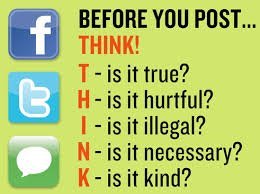
Think before you post or you may receive a visit from us this weekend. Use the internet safely.

Sunday, 10 April 2016

The Archbishop of Canterbury learns he is illegitimate: how very attractive 1955 seems now

A strange story, worthy of a nineteenth century novel, was broken yesterday by, of all people, Charles Moore. Mr. Moore is the former editor of the Daily Telegraph, the Young Fogey's Young Fogey and himself a comfortingly nineteenth century figure, not someone I think of as a sleuth reporter, but on this occasion he has scooped the world.

It seems that, as a result of Mr Moore's investigations, the Archbishop of Canterbury took a DNA test to disprove the rumours about his paternity. He found to his surprise that they were true and that he is the illegitimate son of Sir Winston Churchill's last private secretary, Sir Anthony Montague Browne.

Since Dr. Welby was born almost exactly nine months after his mother's wedding to the

Thursday, 31 March 2016

Quotations I read or remembered recently

"HG Wells had a mind like a limitless ocean, six inches deep."

Rebecca West 


"The race is not always to the swift, nor the battle to the strong, but that's the way to bet." 


Damon Runyon

"It is the wretchedness of being rich that you have to live with rich people."

Logan Pearsall Smith

"The true man wants two things: danger and play. For that reason he wants woman, as the most dangerous plaything." 

Thursday, 24 March 2016

Is America a nation founded on a creed or on British stock and culture?


G.K. Chesterton said in 1921
America is the only nation in the world that is founded on a creed. 
The US's House Speaker Paul Ryan, a Republican, thinks so. He told interns in Congress this week that
America is the only nation founded on an idea not on an identity.
But is that right? Forty years after the American declaration of independence the South American republics were founded by deists and Freemasons based on the same creed. The

Wednesday, 23 March 2016

VERY well done, New Zealand!

Only preliminary results are in but it seems New Zealand voted to keep their old flag - with the Union Jack in the corner. Britishness is the kernel of New Zealand, Australia, Canada and, more distantly, of the USA. More important even than that, history is vital to every nation. History gives one a footing in the universe. The alternative is a soup of individuals possibly linked by things called values.

I wrote here about how nations should not be made of values but of blood and history.

My old friend the historian Andrew Roberts also rejoices at New Zealand's decision.

If only instead of belonging to the European union Great Britain belonged to a similar body composed of Canada, New Zealand and Australia as Joseph Chamberlain far sightedly dreamt of. Rhodesia and South Africa though would have presented problems. 

Friday, 11 March 2016

If the Queen wants to leave the EU does that settle the question?


Does H.M. the Queen want to leave the EU? If she does, does that settle the question of how to vote or would that be being too loyal to the throne?


According to a story in the Sun headlined "Queen backs Brexit" she does and the editor of the Sun, Tony Gallagher, said on Radio 4 
"We knew much more than we published".
But in fact the Sun's story, true or not, dates from 2011 and 'Brexit', Britain leaving the EU, was not mentioned.  So, however much the Sun protests, things are not clear.

I was told last year that the Duke of Edinburgh is strongly for Brexit but the

Sunday, 6 March 2016

Neagu Djuvara tells me Europe is committing suicide


"Europe is committing suicide. Langsam aber sicher. Slowly but surely."

Is there nothing we can do to avoid this, I ask.

"There is no escape. It is our destiny."

I am taking tea with Neagu Djuvaru, the doyen of Romanian historians, who will be 100 in August. He is an old man but has the ebullience of a child, except when he thinks about the future of Europe, which he is glad he will not live to see. There is, he says firmly, no alternative to a Muslim conquest of Europe and the end of Western civilization. 

Friday, 4 March 2016

One day you know that the curtain was up all the time. That was the performance.


One does odd things. You see, when one's young one doesn't feel part of it yet, the human condition; one does things because they are not “for good”; one thinks everything is a rehearsal - to be repeated ad lib, to be put right when the curtain goes up in earnest. One

Thursday, 3 March 2016

Emigrants as national assets in a borderless world

Professor Neagu Djuvara told me, when I met him last week, that his generation, of whom he is one of the last survivors, went abroad to study and to return, whereas young Romanians today leave Romania and do not want to come back. This he describes as tragic.

He has a very good point. Romania is now an emigrant country. Most Romanian emigrants will not come back though more and more do, including the Prime Minister, Dacian Cioloș, who for years worked abroad as an expert in rural development. But what perhaps Professor Neagu Djuvara does not understand is that emigration means something very different in the age of smartphones and Facebook from what it did when he went to Paris to study in the 1930s.

A couple of days after I met Neagu Djuvara  I was invited to a conference on the Romanian diaspora at the Cotroceni Palace in Bucharest and heard Kinsley Aikens, a world authority on diasporas, talk in a much more cheerful  way about migration. Which is as

Wednesday, 2 March 2016

Meeting Neagu Djuvaru

'Europe is committing suicide. Langsam aber sicher. Slowly but surely.'

Is there nothing we can do to avoid this, I ask.

'There is no escape. It is our destiny.'

I am taking tea with Neagu Djuvaru, the doyen of Romanian historians, who will be 100 in August. He is an old man but has the ebullience of a child. He seems a very happy man except when he thinks about the future of Europe, which he is glad he will not live to see. 

There is, he says firmly, no alternative to a Muslim conquest of Europe and the end of Western civilisation. It is a thesis he has repeated several times in interviews. Romanians, who have not been exposed to cultural relativism, treat it with great respect.

I tell him that an American history professor recently said to me that Western civilisation will not come to an end because it is now universal.  There is no other civilisation. But as I
say this I realise that there was no alternative to Western civilisation in the fifth century

Sunday, 28 February 2016

Nations will be made of ink


Joseph De Maistre said that nations are not made of ink. In the future they will be. Made of values, anyway, which come to the same thing.

At the moment, European countries are ethnic states, made of blood and history, even where the bloodlines are partly fictitious. Renan, we recall, defined a nation as a group of

Tuesday, 23 February 2016

Email from the Englishman in Damascus

Joe, the Englishman who lived twelve years in Damascus, sent me these comments, which he says are quick and garbled, on yesterday's post about him.
Since the regime is essentially Alawite and one of the smallest minorities in the country they have looked after the other minorities with exception of the Kurds to act as a barrier to the Sunni majority. There has never been much in the way of sectarian disputes other than resentment of Alawites unfairly promoted to positions of power. If you look at the history of Syria, and remember Damascus is the oldest city in the world, the various faiths have happily lived side by side, so the last forty years of the Assad domination is only blip. Damascus old city is divided amongst all faiths including Jews and

Tuesday, 16 February 2016

I was in Syria in 2007

I was in Syria in 2007 and this is what I saw. 

I was also in Beirut last October. I had a couple of interesting conversations. My taxi driver warned me the migrants in Europe were thieves and bad people (this was seven weeks before Cologne) and a man who knew Assad told me he is "useless, completely useless, a really poor quality person". I wrote about it here.

Sunday, 14 February 2016

What is really going on in Northern Syria

This is a link to two exceptionally important interviews, one with Peter Oborne, an unusually fair-minded journalist with no axe to grind, whom I know and trust, and one with the very knowledgeable Alastair Crooke, an ex-MI6 man who then became Middle East adviser to Javier Solana. The story they tell is very much at odds with the interpretation of the war you read in the Daily Telegraph, the Guardian and the Washington Post and hear on the BBC. There is no doubt that the Syrian forces have committed absolutely terrible atrocities, but the rebels have done the same.

The next step in the war will probably be a race between the Russo-Syrian forces and the

Tuesday, 9 February 2016

Former MI6 man says 'The Syria War Will Not Be a Quagmire -- Because Putin and Assad Are Winning'


I recommend you click on this very interesting article 
by Alastair Crooke in the Huffington Post about the sudden recent successes of the Russians in Aleppo, which he thinks mean victory for the government is imminent.  Alastair Crooke used to work for M16, writes regularly for the Guardian and was Middle East adviser to Javier Solana, the EU's High Representative for Common Foreign and Security Policy, from 1997 to 2003.

Points from the article include:

If government forces, moving north, can make friendly contact with the Kurds in the northeast, almost all Nusra and allied rebel forces would be nearly surrounded. The insurgents would be caught in a cauldron with their backs to a lightly populated and forested territory.


The ISIS-controlled corridor, especially the Jarablus border crossing with Turkey, remains effectively open. Turkey has proclaimed this represents its "red line." Were this corridor to be closed by the Syrian Kurds, the Turks have indicated they could respond by invading Syria. The YPG say nonetheless, that they are contemplating just such a move.

...Syria seems to be heading not towards a "quagmire" as many western politicians have suggested, but rather to a clear military outcome. As one

Sunday, 7 February 2016

Sun Tzu in his Art of War explains the crisis in the Western world today


"If you know your enemy and you know yourself you need not fear the results of a hundred battles. If you know yourself but not the enemy for every victory gained you will also suffer a defeat. If you know neither the enemy nor yourself you will succumb in every battle."

Whatever one thinks of him, Trump is a genius

I was arguing with a Romanian friend (Romanians are often tremendous intellectual snobs) who insisted that Donald Trump, Sarah Palin and George W Bush were all too stupid to be president.

About Sarah there is no question. But not about the others.

Stupid people do not do what Trump has done, destroy the Bush dynasty, outsmart the Republican party and runs rings round every other politician. He is a born natural for politics. Think Tony Blair in England, Ion Iliescu in Romania.  Of course, it's intuitive with Trump, as with Berlusconi, Blair and Putin. Hitler too, I suppose, and probably Pericles. All great politicians and artists are intuitive.

I long considered Putin a stupid man in many ways, a poor strategist but a very good tactician. (I remember an English friend of mine, who lived in Russia, telling me 'Russians